🎧 Listen to this story
Narrated by Kore · 5,793 characters
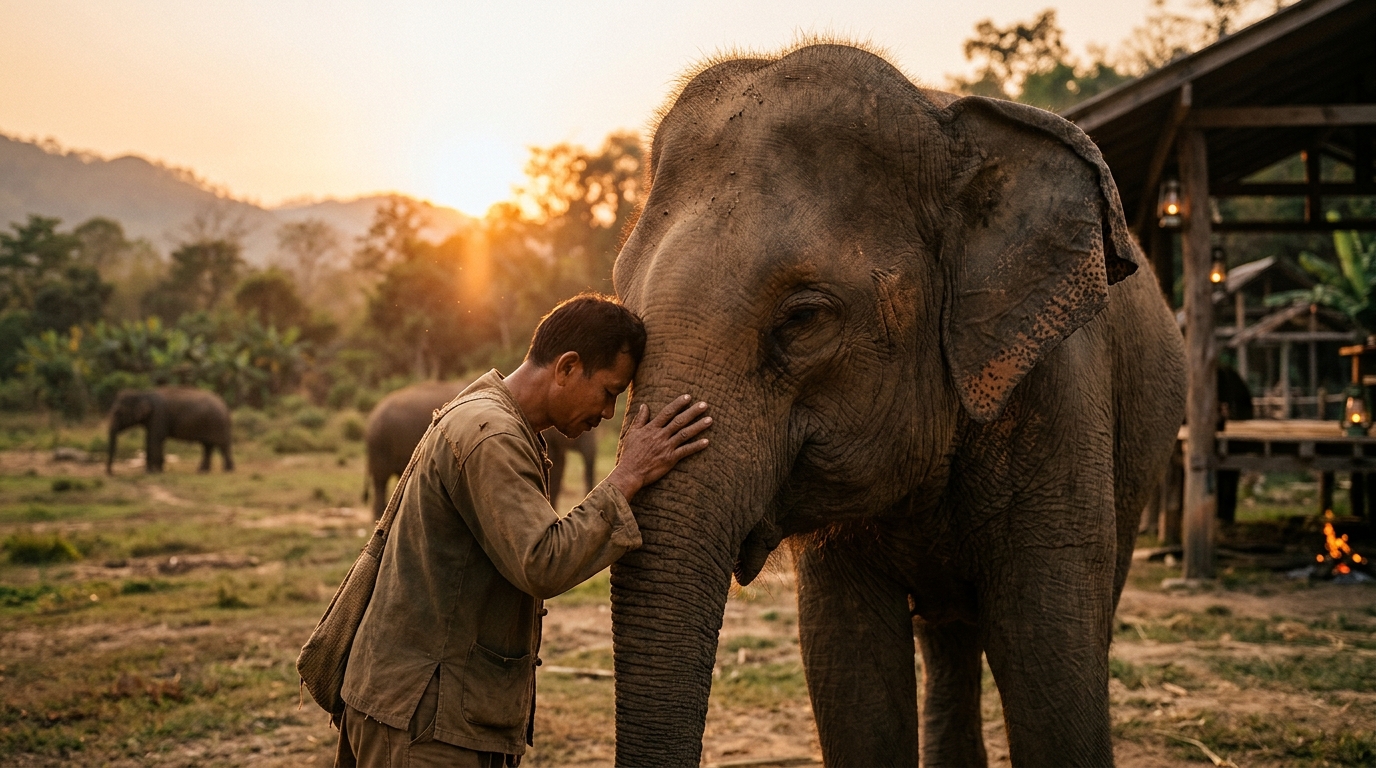
Every sanctuary keeper has a story they tell quietly, usually near the end of the day, once the gates are latched and the light turns the color of warm honey. At an elephant sanctuary in the foothills, that story belongs to a female named Mara, and it begins with a very long silence.
A Giant Who Kept to the Edges
Mara arrived at the sanctuary after nearly four decades of working in logging camps and then a roadside attraction. She was thin, wary, and utterly alone in her own mind. The caretakers described her as a creature who had learned that the safest place to stand was the farthest corner of any enclosure.
Elephants are among the most social animals on earth. They live in matriarchal family groups, greet one another with trunk touches, and mourn their dead. For Mara, those bonds had been stripped away decades earlier. She did not know how to join a herd, and for a long while, she did not seem to want to try.
The staff did not push. They had learned long ago that healing cannot be hurried, and that trust is built the way a tree grows: slowly, and mostly when no one is watching.
The Habit Nobody Planned
It was a new caretaker named Joaquin who first noticed the pattern. During the heat of the day, Mara stayed hidden among the trees at the far edge of the property. But as the afternoon softened toward evening, she would drift out to a low rise overlooking the western pasture and simply stand there, facing the sun as it sank.
She was not eating. She was not exploring. She was watching.
"I thought maybe she just liked the warmth," Joaquin said later. "But she would stay until the sky went purple. Every single evening. It was like she was waiting for something."
What she was waiting for, it turned out, was the herd.
The Sunset Gathering
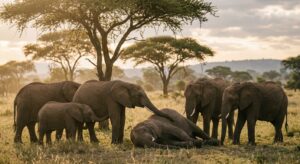
The sanctuary’s other elephants had developed their own end-of-day rhythm. As the heat broke, the group, a loose family of six females who had bonded over years, would wander up the same slope to graze in the cooling air. They moved slowly, rumbling softly to one another, trunks brushing backs and ears.
At first, Mara kept her distance, watching from the rise while the others grazed below. Over several weeks, the distance narrowed by a few feet at a time. The caretakers kept careful notes, and what they recorded reads almost like a love letter written in small increments:
- Week one: Mara stands alone at the top of the rise, roughly sixty yards from the herd.
- Week three: She moves to forty yards. One of the older females, Thandi, pauses and looks directly at her.
- Week five: Thandi rumbles low and long, a sound the keepers call a greeting. Mara answers with a quiet one of her own.
- Week eight: Mara grazes at the edge of the group, close enough that her ear touches another elephant’s shoulder.
No one clapped. No one cheered. The keepers simply stood in the amber light with lumps in their throats, understanding that something enormous had just happened in the quietest possible way.
Why Evening Made It Possible
Animal behaviorists will tell you that dusk is a natural softening point for many species. The heat drops, the noise of the day fades, and creatures that spend their daylight hours guarded often relax their defenses. For a wary elephant, the gentle, dimming light may have felt safer than the bright exposure of midday.
But there is something more human in it too, something most of us recognize. Many of us carry our own guardedness through the loud hours of the day. It is often in the stillness of evening, when the demands fall away, that we finally let someone close.
Mara did not need the crowd or the commotion. She needed the hush, the long shadows, and a herd patient enough to let her arrive on her own terms.
What the Herd Taught Her, and Us
Today, Mara still ends each day on that western rise, but she is no longer alone there. The herd gathers around her as the sun goes down, a slow cluster of gray shapes against a burning sky. Thandi stands closest, often resting her trunk gently across Mara’s back.
Watching them, it is hard not to think about the quiet lessons hidden in the scene.
Belonging does not have to be rushed
Nobody forced Mara into the group. The herd simply kept showing up in the same place at the same hour, offering presence without pressure. That steady, unhurried welcome did more than any grand gesture could have.
The first step is often just showing up
Before Mara ever touched another elephant, she stood at the edge and watched. That watching mattered. It was her way of saying, in the only language she had, that she was ready to be near them, even if she was not yet ready to be among them.
Healing happens in small, repeated moments
There was no single breakthrough. There was only the same sunset, the same hill, and a little more closeness each time. Recovery, for animals and people alike, is rarely a dramatic event. It is the accumulation of gentle evenings.
A Thought to Carry Into Tonight
As the day winds down where you are, consider the people in your life who stand at the edges. A coworker who eats lunch alone. A neighbor who waves but never lingers. A friend who has gone quiet. They may be waiting, like Mara, for someone to simply be there at the same time tomorrow, without asking anything of them.
You do not need a speech or a grand plan. You only need to be the kind of presence that makes the distance feel safe to cross.
Out on that western rise, the last light is fading now. Seven elephants stand shoulder to shoulder against a sky of rose and gold, trunks intertwined, rumbling softly in the dusk. And at the center of them, once the loneliest creature on the property, is a giant who finally, after forty long years, has somewhere to belong.
Tonight, may you find your own quiet hill, and the company that makes the sunset worth watching.