🎧 Listen to this story
Narrated by Kore · 7,440 characters
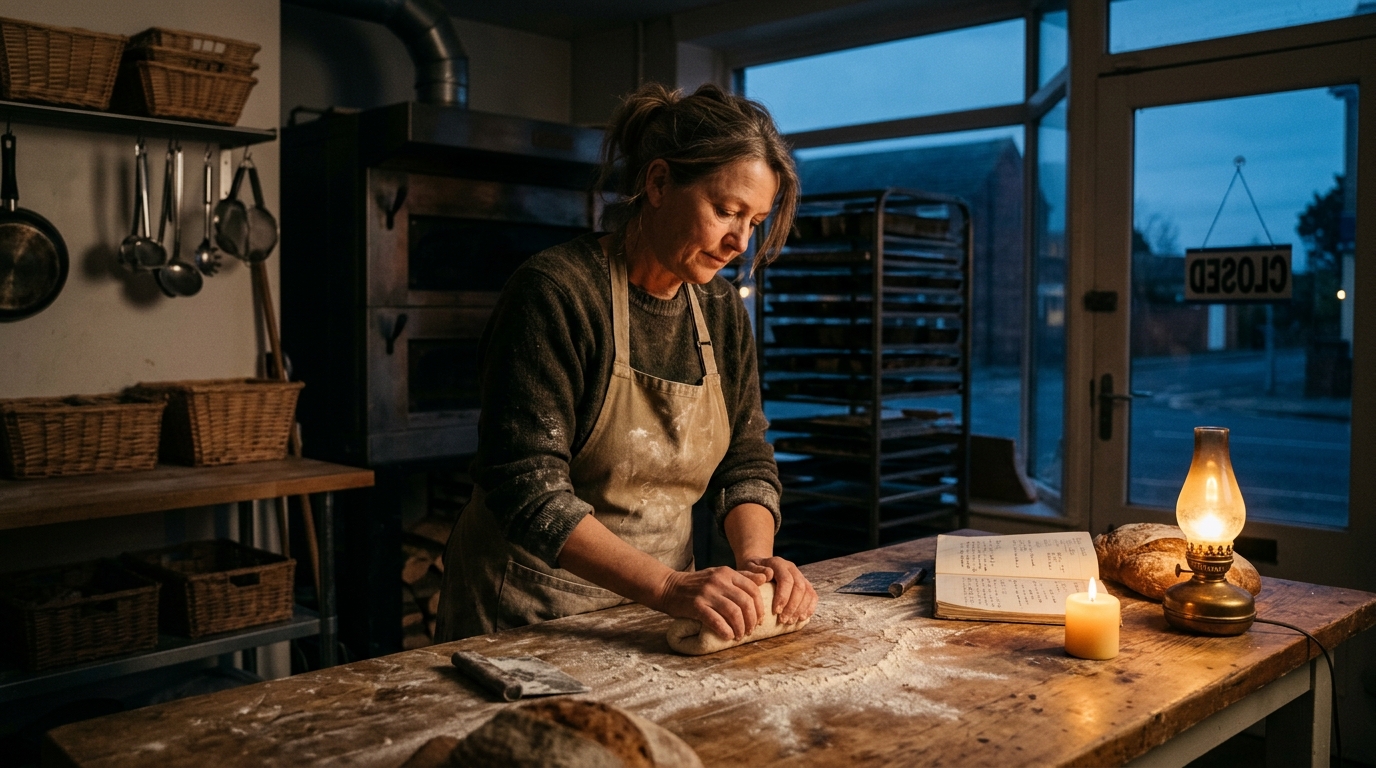
At 8:40 on a Tuesday night in late October, Marguerite Dalloway stood alone in the back of her bakery, flour still in the creases of her knuckles, and did the thing she had done every night for two years: she counted what went wrong.
Three loaves unsold. A cracked display case. A wholesale client who had quietly stopped ordering. A rent payment she was not sure she could cover. The list ran long, and it always ended the same way, with her sitting on an overturned crate in the dark, wondering if she should just let the place go.
This is the story of how a single change to the last ten minutes of her day turned a failing shop into a thriving one. It did not happen overnight, and it did not happen because of a clever marketing plan. It happened because of a small notebook, a quiet kitchen, and a decision about how to end the day.
The Nightly Ledger of Regret
Marguerite opened Dalloway & Daughters in a converted storefront on a street that had seen three other businesses fail in five years. She had left a stable job in logistics to chase a dream she had carried since childhood, when she stood on a step stool beside her grandmother and learned to fold dough.
For the first year, the dream felt alive. The second year, it started to feel like a weight.
Every night, after the last customer left and the ovens cooled, she did what she called her closing audit. It was not a financial review. It was an emotional one. She walked the empty shop and catalogued every failure, every missed chance, every mistake. She replayed conversations. She second-guessed prices. She wondered who she had disappointed.
She would drive home exhausted and sleep poorly, and wake up already behind. By her own admission, she was running the business from a place of dread.
“I thought I was being responsible,” she told me. “I thought if I stared hard enough at what went wrong, I would fix it. But all I was really doing was teaching myself to expect disaster.”
The Night Everything Shifted
The change began with a small, ordinary moment. An elderly customer named Walter, a retired mail carrier who had come in every morning for eighteen months, lingered at the counter one evening just before closing.
He did not buy anything. He just said, “I wanted to tell you that this is the best part of my day. My wife passed last spring. Coming here, the smell, the warmth, a person who remembers my name. It is the reason I get out of the house.”
Then he thanked her and left.
Marguerite stood there for a long moment. Later that night, sitting on her crate, she started her usual audit, and then she stopped. She realized she had spent two years cataloguing everything that went wrong and had never once written down what went right. Walter was not a line item. He was not revenue. But he was the entire point.
She pulled a pen from her apron pocket, grabbed the back of an order slip, and wrote one sentence: Walter said this place is the best part of his day.
It was the first entry in what would become a nightly habit.
The Ten-Minute Closing Practice
Over the following weeks, Marguerite replaced her closing audit with a simple practice. She kept it deliberately small, because she knew that anything complicated would not survive a long, tired day. Here is what she did, in order:
- Turn off the front lights and sit down. Not to clean, not to count, just to sit for one full minute in the quiet.
- Write down three things she was grateful for from that day. They could be tiny: a customer’s laugh, a perfectly risen loaf, a text from her daughter.
- Name one person she wanted to thank. Sometimes she wrote a note for the next morning. Sometimes she just said the name out loud.
- Write one lesson, not one failure. If something had gone wrong, she asked what it taught her rather than what it said about her.
- Say “enough for today” and leave. No more rehearsing. The day was finished.
She told me the last step was the hardest and the most important. For two years she had treated closing time as a courtroom. Now it was more like a lullaby.
What Changed on the Inside First
The first changes were not visible to anyone but Marguerite. She slept better. She stopped waking at three in the morning with her heart racing. She arrived at the shop each morning lighter, and the lightness showed.
She began greeting customers with real warmth instead of strained cheer. She remembered more names because she was actually paying attention, rather than being lost in worry. When something went wrong, she met it with curiosity instead of panic.
Psychologists have long noted that practices of gratitude tend to shift attention toward what is working, which in turn can reduce stress and improve sleep. Marguerite knew none of the research when she started. She only knew that the knot in her chest had begun to loosen.
The Ripple Outward
The business changes came slowly, then all at once.
Her gratitude notes began to include customers, and soon she started leaving them there. Small handwritten cards tucked into pastry boxes: Thank you for trusting us with your birthday. We were glad to see you back this week. People noticed. People kept the cards. A few posted photos of them online.
She started a “Walter’s Table” in the corner of the shop, a long communal table with coffee and day-old bread set out for anyone who wanted company. It began as a way to honor the man who had changed her outlook. It became a gathering place for neighbors, widows, night-shift workers, and new parents who needed somewhere warm to sit.
Her wholesale client returned, not because of a discount, but because she had written to him honestly, thanking him for the time they had worked together and wishing him well. He wrote back and asked to resume the order.
Within eight months, Dalloway & Daughters was turning a profit for the first time. Within two years, Marguerite had hired four employees, and the line on weekend mornings stretched out the door.
The Lesson That Settles In at Dusk
I asked Marguerite what she would say to someone running a struggling business, or honestly, a struggling anything, who ends each day in the same spiral she once did.
She thought about it for a while, the way people do when they want to be accurate rather than impressive.
“Regret is a story about the past,” she said. “Gratitude is a story about what is still here. I did not suddenly have a different shop. I had the same ovens, the same rent, the same cracked display case. I just started ending the day by noticing what was good instead of what was broken. And somehow, noticing became building.”
She still keeps the original order slip with Walter’s sentence on it, pinned above the back-room sink. She still sits on the crate each night, though she has since bought a proper stool. The practice has never changed.
Try It Tonight
You do not need a bakery to borrow Marguerite’s ritual. Wherever your day ends, at a desk, in a kitchen, in a parked car outside your house, you can close it deliberately.
- Pause before you move on to the next thing.
- Name three small good things that happened, however ordinary.
- Thank one person, even silently.
- Turn one frustration into one lesson.
- Tell yourself, honestly, that today was enough.
The day is already over. The only thing left to decide is what story you carry into sleep.
Marguerite chose gratitude, and the morning she woke up to, and the business she built from it, became something she never could have forced through worry alone.