🎧 Listen to this story
Narrated by Kore · 7,349 characters
It was a Tuesday, which tells you nothing, because for most of my adult life every day was a Tuesday. Same alarm, same coffee gulped standing up, same calendar so packed with color-coded blocks that it looked like a stained glass window someone had dropped.
That evening, a power outage took out the whole street at 6:40 p.m. No laptop. No television. No glowing rectangle to hide inside. Just me, a half-eaten sandwich, and a quiet so complete I could hear my own pulse.
I want to tell you about what happened in that quiet, because it changed the way I live. And I want to tell you honestly, because it was not a pleasant revelation at first.
The Hour the Lights Went Out
I sat on the back step, mostly because there was nowhere else to go. The sky was doing that slow evening thing, shifting from peach to a deep, bruised blue. A few porch lights flickered on down the block, the battery-powered kind some neighbors kept for emergencies. Crickets started up. A dog barked twice and gave up.
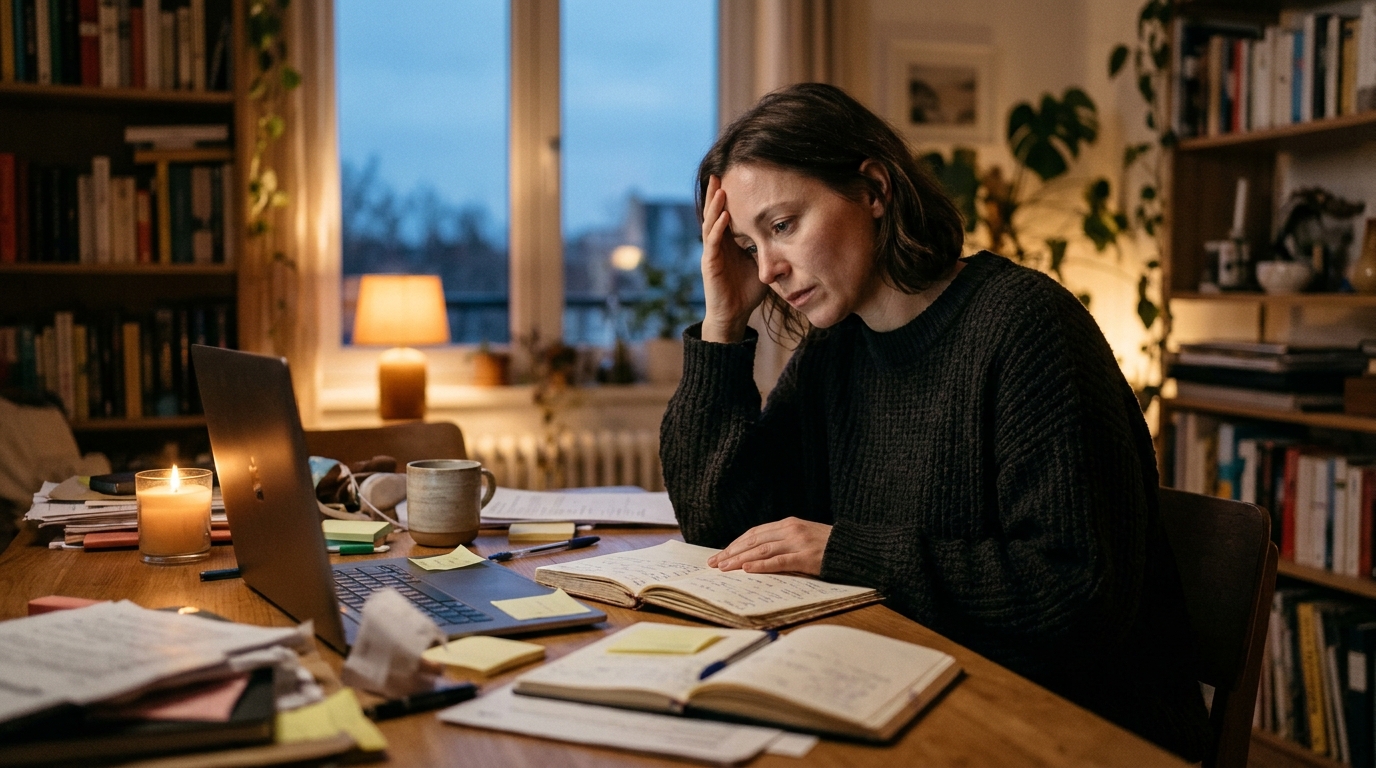
For about ten minutes, I was almost frantic. My hands kept reaching for a phone that was at three percent and useless anyway. My mind started its familiar ticker tape: the report is due Thursday, I never answered Maria’s email, I should be at the gym, I should call Mom, I should, I should, I should.
Then, somewhere around the fifteen-minute mark, the ticker tape ran out of tape.
And underneath it was something I had been outrunning for years.
What Was Hiding Under the Schedule
It was not dramatic. There was no thunderclap. It was a small, quiet, uncomfortable thought, the kind that only speaks up when everything else has gone silent:
I was not busy because I had so much to do. I was busy because I was afraid of what I would feel if I stopped.
I sat with that for a long time. Because once I said it, I could see it everywhere. The way I filled every gap in my day. The way I said “I’m swamped” like a badge of honor. The way a free Saturday made my chest tighten instead of my shoulders drop.
I was afraid of a few specific things, and I will name them, because naming them took away some of their power:
- Fear of being ordinary. If I was not producing, achieving, or improving, who was I?
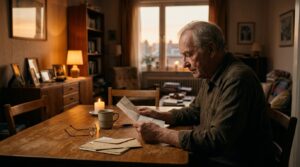
- Fear of old grief. I had lost my father three years earlier and never really let myself sit in it. Busyness was a very efficient way to avoid the sadness.
- Fear of being left behind. Everyone around me seemed to be moving so fast that slowing down felt like falling off a moving train.
- Fear of silence itself. Because silence asks questions, and I did not trust my own answers.
The Moment It Finally Landed
Here is the thing I keep coming back to. Nobody scolded me into this realization. There was no wise stranger, no self-help book, no therapist’s gentle question. It was just dusk, and a dark street, and a body that was finally too tired to keep running.
The evening has a particular kind of honesty. The day’s performance is over. Nobody is watching. The version of you that you put on for meetings and errands and small talk has nowhere left to be. What remains is the actual you, sitting on a step, a little tired, a little scared, and, I discovered, a little relieved to finally be found.
I cried that night. Quietly, on the back step, in the dark, for my father and for the three years of not crying. It was not tidy. But it felt like setting down a bag I had been carrying so long I had forgotten it was heavy.
How Busyness Disguises Itself
The tricky part about busyness is that it looks like virtue. We are rewarded for it. Employers praise it, friends envy it, and our culture treats a full calendar as proof of a full life. So it is easy to miss when it has quietly become a hiding place.
Here are some signs I learned to watch for in myself, and maybe you will recognize a few too:
- You feel guilty during rest. If a quiet afternoon makes you anxious rather than restored, that is worth noticing.
- You say yes before checking in with yourself. Overcommitting is often a way of avoiding the empty space where feelings live.
- You reach for a screen the moment you are alone. Not out of need, but out of reflex, like swatting at a mosquito.
- You cannot remember the last time you were bored. Boredom is where the real thoughts hide, and we have all but banished it.
- You dread the end of the day. Because evening means the noise stops, and the noise was doing a lot of work for you.
What I Changed (Gently, and Imperfectly)
I wish I could say I tore up the calendar the next morning and became a serene woodland creature. I did not. Real change is slower and far less photogenic.
But I did start small, and the smallness is the point. I began protecting one quiet hour every evening, and I want to be clear that it was not productive. No journaling prompts, no meditation app, no optimizing. Just sitting. Sometimes on that same back step, sometimes by a window with a cup of tea going cold.
At first it was awful. My mind raced and my fingers itched. But the discomfort softened, the way a stiff muscle loosens when you stop clenching it. Within a few weeks, the evening hour became the best part of my day.
Three Small Practices That Helped
- The phone goes to another room at dusk. Not forever, just for that one hour. The world survives without me. It always has.
- I ask one gentle question. Not “what did I accomplish?” but “what did I feel today that I did not have time to notice?”
- I let the sadness visit. When grief shows up, I no longer schedule it away. I make it a cup of tea and let it sit with me for a while.
The Quiet Gift on the Other Side
Something unexpected happened as the months passed. I did not become less capable or less productive. If anything, I became more present in the work I chose to keep. Without the frantic undercurrent, I could actually tell what mattered from what was merely loud.
I dropped a few commitments that had been there only to fill space. I called my mother, not out of obligation, but because I genuinely wanted to hear her voice, and we talked about my father for the first time in years. We laughed. We cried a little. It was the best conversation we had had in a decade.
My calendar is still fairly full, to be honest. But it is full of things I chose, rather than things I used as armor.
A Gentle Question to Carry Into Tonight
If you are reading this in the evening, maybe as the light fades and the house settles, I would like to offer you something. Not advice, just an invitation.
Tonight, before the day closes, try sitting in the quiet for even five minutes. Put the phone down. Let the noise drain out of the room. And ask yourself, softly, without judgment: What have I been too busy to feel?
You might be surprised by the answer. It might be grief, or longing, or simple exhaustion. It might be something joyful you forgot to notice. Whatever it is, it has been waiting patiently, the way good things do, for the lights to go out.
The power came back on at about 9:15 that Tuesday night. I remember watching the streetlamps flicker alive, one by one, down the block. Strangely, I felt a small pang of loss. The dark had been so honest.
But I carried a little of it with me. I still do. A candle’s worth of stillness, tucked away for the evenings when the world gets too loud and I need to remember who I am when I am not rushing anywhere at all.
Sleep gently tonight. You have done enough.