
🎧 Listen to this story
Narrated by Callirrhoe · 7,438 characters
A Childhood Stolen by War
There are childhoods defined by scraped knees and birthday cakes, by the smell of school lunches and the sound of a parent calling you home for dinner. And then there are childhoods like Emmanuel Jal’s, defined by the weight of a rifle, the sound of gunfire, and the constant, gnawing presence of death.
Born in South Sudan in the early 1980s, Emmanuel was just a young boy when the Second Sudanese Civil War tore through his village like a fever that would not break. His mother was killed. His family was scattered. And before he had lost his first tooth, he was recruited into the Sudan People’s Liberation Army, one of thousands of child soldiers caught in a conflict that would claim more than two million lives.
He was nine years old the first time he held a gun as a soldier, not a toy, not a prop, but a weapon handed to him by adults who had decided that children were expendable tools of war.
Surviving the Unsurvivable
What Emmanuel experienced in those years is almost beyond the reach of words. He witnessed executions. He marched for days without food or water. He watched friends, some even younger than himself, collapse and die on the roadside. At one point, stranded and starving, he and a group of other child soldiers resorted to eating grass, rats, and the leather from their own shoes simply to stay alive.
In a particularly haunting chapter of his story, Emmanuel has described a period where he was so close to death from starvation that he made a quiet, desperate bargain with God: if he survived, he would do something with his life that mattered.
That bargain, made in the dirt and desperation of a war zone, would shape the next three decades of his life.
The Woman Who Saved Him
Emmanuel’s escape from the front lines came through an extraordinary act of grace. A British aid worker named Emma McCune, working in Sudan at the time, encountered him and recognized not a soldier but a child. She smuggled him out of the country, brought him to Nairobi, Kenya, and enrolled him in school, giving him something he had never truly had before: a future.
Emma McCune died tragically in a car accident not long after, before she could see the full impact of what her compassion had set in motion. But the seed she planted did not die with her. Emmanuel went on to finish his education, and in the quiet moments between classrooms and survival, he discovered music.
From the Battlefield to the Recording Studio
Music became Emmanuel’s language for processing the unprocessable. He began writing rap and hip-hop tracks that drew directly from his experiences, blending traditional Sudanese sounds with contemporary beats to create something that felt urgent, raw, and deeply human. His lyrics were not polished pop confections. They were testimonies.
His debut album introduced him to audiences across Africa and eventually the world. He performed for crowds who had never heard of South Sudan, who knew nothing of child soldiers, who could not have pointed to his homeland on a map. And yet they wept. Because grief, when it is honest enough, crosses every border.
Emmanuel has since released multiple albums and collaborated with international artists, using every platform he earns to direct attention back to the children still trapped in conflicts around the world.
Speaking Truth to Power
What sets Emmanuel Jal apart from many survivors who find public platforms is his refusal to remain comfortable. He did not simply escape war and build a quiet life. He walked back toward the wound, again and again, to speak for those who could not.
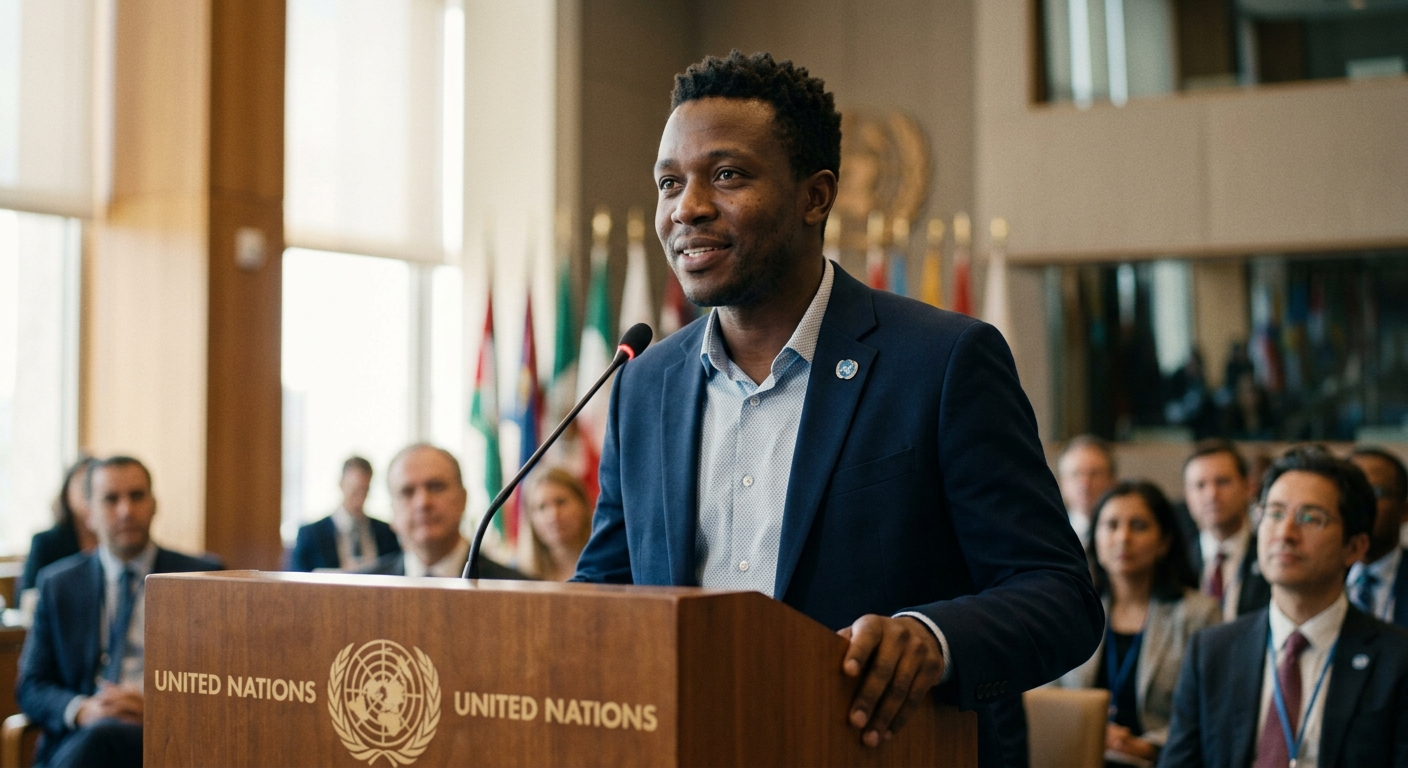
He has addressed the United Nations. He has testified before international bodies. He has sat across from heads of state and told them, calmly and directly, what it feels like to be a child handed a weapon instead of a pencil. His words carry the particular authority of someone who has lived inside the statistics that policymakers cite.
He has also founded organizations dedicated to education and peace-building in South Sudan, understanding that the most durable weapon against war is a well-funded school.
7 Lessons Emmanuel Jal’s Story Teaches Us
- Survival is not the end of the story. Emmanuel did not stop at escaping. He transformed his survival into a mission, proving that what we do after the hardest chapters defines us more than the chapters themselves.
- One person’s compassion can redirect a life entirely. Emma McCune did not save a symbol. She saved a child. That single act rippled outward into decades of advocacy and art.
- Art can carry what words alone cannot. When policy documents fail to move people, music sometimes succeeds. Emmanuel’s songs have opened hearts that speeches could not reach.
- Trauma does not disqualify you from leadership. In many cultures, those who have suffered most are the first to be dismissed as too broken to lead. Emmanuel’s life is a direct challenge to that assumption.
- Anger can be channeled without being erased. Emmanuel has never pretended he is not angry about what happened to him. But he has chosen, deliberately and with great effort, to direct that anger toward construction rather than destruction.
- Children are never weapons. This should not need saying, and yet it does. Emmanuel has made it his mission to repeat it in every room powerful enough to change the laws that allow children to be conscripted into conflict.
- Hope is a discipline, not just a feeling. On the days when Emmanuel has described wanting to give up, he has spoken of choosing hope the way you would choose to keep walking when your legs want to stop. It is a practice, not a gift.
The Bargain He Kept
Remember the bargain Emmanuel made with God in the dirt, half-starved and certain he was dying? That he would do something meaningful if he lived?
By any measure, he has kept his end of it. The boy who was handed a rifle instead of a childhood grew into a man who hands microphones to the voiceless and classrooms to children who might otherwise become soldiers. He did not just survive the war. He declared himself its opposite.
In interviews, Emmanuel often speaks about what he wants his legacy to be. Not fame, not awards, not the kind of recognition that fades when the news cycle moves on. He wants to be remembered as someone who refused to let what was done to him be the final word on who he became.
Why This Story Belongs to All of Us
It would be easy to read Emmanuel Jal’s story and feel it has nothing to do with your own life. You were not a child soldier. You did not survive a civil war. You have probably never been so hungry you ate shoe leather.
But the deeper architecture of his story is familiar to anyone who has ever had their future interrupted by forces outside their control, anyone who has grieved something that should not have been taken from them, anyone who has wondered whether the damage done to them is simply too great to build something meaningful on top of.
Emmanuel’s answer to that question is not a motivational poster. It is a life, messy and ongoing and imperfect, that simply refuses to stop moving forward.
And perhaps that is the most important thing he has ever taught us: that peace is not a destination you arrive at. It is a direction you choose to keep walking in, even when the road is long, even when you are tired, even when the weight of what you carry makes every step feel impossible.
He is still walking. And he is asking the rest of us to walk with him.