🎧 Listen to this story
Narrated by Schedar · 6,799 characters
The Moment I Realized My Stuff Was Owning Me
It started with a broken coffee maker. I had gone to replace it, walked into the store, and found myself standing in an aisle staring at forty different models. Forty. For a machine whose entire job is to make coffee. I stood there for twenty minutes, paralyzed, and then walked out empty-handed. On the drive home, something quietly cracked open inside me.
I thought about the closet in my bedroom that I could barely close. I thought about the storage unit I was paying $90 a month to keep things I had not touched in three years. I thought about the spare bedroom that had become a graveyard for exercise equipment, holiday decorations, and boxes I had moved from apartment to apartment without ever unpacking. I had spent years accumulating a life, and somewhere along the way, the life had gotten buried under the stuff.
That weekend, I started sorting. What followed over the next six months changed me more than any trip I have ever taken, any book I have ever read, or any conversation I have ever had.
The Rules I Set for Myself
I was not interested in becoming a monk or living out of a single backpack. That was not the point. The point was to be intentional, to keep only what genuinely served my life right now, not the life I used to have or the life I imagined I might someday live.
I gave myself a simple framework:
- If I had not used it in 12 months, it left the house. No exceptions, no “but what if.”
- If it carried guilt instead of joy, it was gone. The bread maker my mother-in-law gave me. The art supplies for a hobby I kept meaning to pick up. Gone.
- If I owned multiples out of anxiety rather than necessity, I let the extras go. Seven black t-shirts is not a capsule wardrobe. It is fear of laundry.
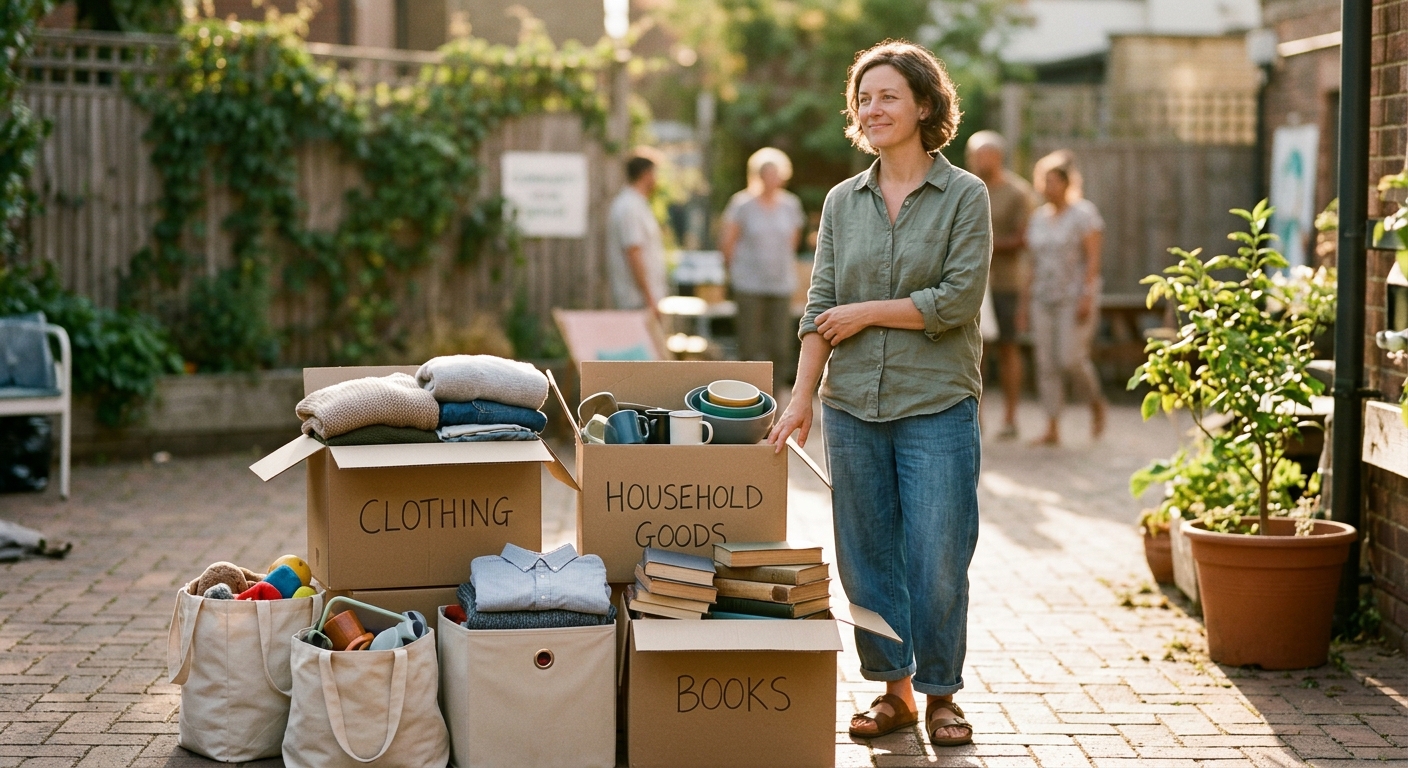
- Everything that left had to go somewhere useful. Shelters, friends, Buy Nothing groups, thrift stores. Nothing went to landfill if I could help it.
By the end of the first month, I had filled twelve donation bags and sold enough on Facebook Marketplace to fund a weekend trip I had been putting off for two years.
What I Did Not Expect: The Emotional Weight of Objects
Nobody warned me about this part. Objects, it turns out, are not neutral. They carry stories, obligations, and sometimes grief. There was the box of my father’s things I had been holding onto since he passed. I had not opened it in four years, but I moved it from shelf to shelf like a reliquary I was too afraid to disturb.
Letting go of physical possessions forced me to confront emotional possessions I had been avoiding entirely. I finally sat down with that box. I kept three things: a photograph, his old wristwatch, and a note he had written me when I graduated college. Everything else, I let go of with intention and, surprisingly, with relief.
Grief counselors often talk about how clutter can become a way of holding grief in place, a subconscious refusal to move forward. I did not understand that until I lived it.
The Surprising Side Effects Nobody Talks About
Here is what minimalism literature will not always tell you, the parts that caught me off guard:
1. Decision Fatigue Nearly Disappeared
When you own fewer things, you make fewer decisions. My mornings became quieter. I was not digging through drawers, debating outfits, or searching for charger cables. That mental energy, freed up before 8 a.m., started flowing into things I actually cared about.
2. My Apartment Felt Bigger Without Moving
Same square footage. Same furniture layout. But with the excess cleared out, I noticed the afternoon light in a way I never had before. I started sitting by the window with my coffee instead of hunching over a laptop surrounded by clutter. Space, it turns out, is something you can create without ever calling a real estate agent.
3. I Started Buying Better, Not More
Once I cleared the excess, I became far more thoughtful about what I brought in. I replaced the broken coffee maker, eventually, with one model I researched carefully and loved. I bought fewer clothes but spent more on quality pieces that fit well and lasted. Paradoxically, I started feeling better dressed, better equipped, and better fed than when I had excess of everything.
4. Generosity Became Contagious
When you practice giving things away, the muscle gets stronger. I found myself offering more freely in other areas: time, attention, help, encouragement. Something about releasing the grip on objects seemed to loosen the grip I had been keeping on other parts of myself too.
The Number That Stopped Me in My Tracks
At some point during the process, I looked up a statistic that I cannot stop thinking about. The average American household contains over 300,000 items. Not counting digital clutter. Just physical objects. Meanwhile, research consistently shows that experiences, relationships, and a sense of purpose drive long-term happiness far more reliably than possessions do. We are, collectively, drowning in things that are not making us happy.
I am not pointing fingers. I was one of those households. I bought things when I was bored, when I was sad, when I was celebrating, when I was anxious. Shopping had become a default emotional response to nearly every state of being. Clearing my space forced me to find other responses, better ones.
What “Rich” Actually Means Now
Six months after that day in the coffee maker aisle, I live with roughly half of what I used to own. My storage unit is gone. My spare bedroom has a reading chair and a small desk and actual floor space. My closet closes easily.
But the thing that surprises me most is not the tidiness. It is the feeling of abundance that moved in when the clutter moved out. I notice more. I appreciate more. A Saturday morning with a good book and an uncluttered kitchen feels genuinely luxurious in a way that no purchase ever quite managed to deliver.
I am not richer in the way a bank statement would reflect. But I feel, daily, like someone who has more than enough. And honestly, after years of accumulating in search of that feeling, I am not sure there is a better kind of wealth than that.
Where to Start If This Resonates With You
You do not need to overhaul your entire home in a weekend. You do not need to read every minimalism book or follow a strict method. Here is the gentlest possible entry point:
- Pick one drawer. Just one. Clear it out completely, wipe it down, and only put back what you actually use.
- Notice how you feel. That feeling is data worth paying attention to.
- Let that feeling guide the next step.
The goal is never an empty house. The goal is a home where everything earns its place, and where you can actually feel yourself living in it. That is not deprivation. That, I promise you, is one of the quietest and most profound forms of abundance you will ever find.