🎧 Listen to this story
Narrated by Vindemiatrix · 8,481 characters
The Waiting Room That Never Emptied
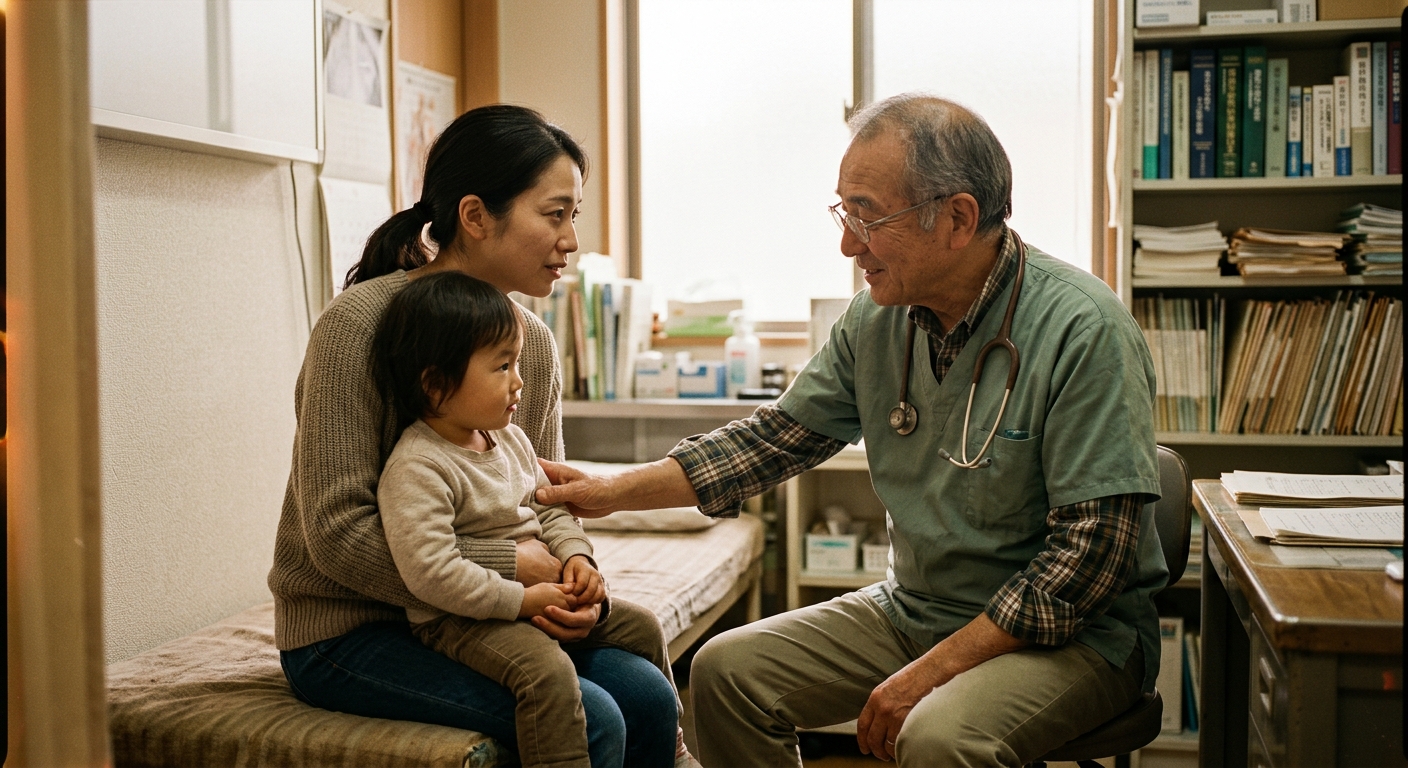
On any given Tuesday morning, the waiting room at Dr. Samuel Okafor’s clinic in rural Appalachian Kentucky looked less like a medical office and more like a community gathering. Grandmothers clutched insurance cards they hadn’t needed in years. Teenagers translated for Spanish-speaking parents. Toddlers in hand-me-down shoes chased each other between the plastic chairs. And behind the reception desk, there was no sliding glass window, no stern-faced billing coordinator, no laminated sign listing accepted insurance providers.
There was just a handwritten note, taped crookedly to the wall with a piece of masking tape, that read: “No family will be turned away. We will figure it out together.”
Dr. Okafor, now 67, has been practicing pediatric medicine in Harlan County for over thirty-five years. In that time, he has treated more than 40,000 children. He has diagnosed rare cancers, managed complex asthma cases, and talked frightened parents down from ledges of panic in the middle of the night. He has also, by his own rough estimate, written off more than two million dollars in unpaid medical fees, and he has done so without regret, without fanfare, and without ever once making a family feel ashamed for needing help.
Where He Came From
Understanding why Dr. Okafor built his practice this way requires understanding where he came from. Born in Lagos, Nigeria, in 1957, Samuel was the fifth of eight children raised by a schoolteacher father and a mother who sold fabric at the local market. Medical care in his neighborhood was inconsistent and expensive. He remembers watching a neighbor’s child die from a treatable infection simply because the family could not afford the clinic visit.
“That image never left me,” he said during a recent conversation at his office, surrounded by stacks of patient files and drawings from children pinned to every available surface. “A child died from something I could have fixed with a ten-dollar antibiotic. I decided very early that if I ever had the power to help, I would not let money be the reason I didn’t.”
He earned a scholarship to study medicine in the United Kingdom, completed his pediatric residency in London, and then, in a move that baffled many of his colleagues, chose to settle not in a major American city but in one of the most economically distressed counties in the entire United States.
What His Practice Actually Looks Like
Dr. Okafor’s clinic operates on a sliding scale system, but in practice, that scale often slides all the way to zero. Families who receive Medicaid are billed through the program. Families with private insurance are billed normally. But for the estimated thirty percent of his patient base who are uninsured, underinsured, or simply unable to pay even nominal fees, Dr. Okafor absorbs the cost himself, supplements through a small community fund he established, and accepts donations of supplies from local churches and civic organizations.
His staff, a team of four that has remained largely unchanged for fifteen years, are paid competitive wages. He has never once asked them to take a pay cut to subsidize his generosity. “My choices are my choices,” he said plainly. “I do not put that burden on anyone else.”
A Typical Week at the Clinic Might Include:
- A single mother bringing in three children at once because she could finally get a ride to town
- A grandfather raising his grandchildren after their parents’ struggles with addiction
- A migrant farming family with no documentation and significant fear of accessing public services
- A teenager with undiagnosed ADHD whose school had flagged behavioral concerns for years
- A newborn whose parents drove forty-five minutes because every other pediatrician in the region had a six-week wait for new patients
Dr. Okafor sees them all. He takes his time with each one. His appointments run long, and his days run longer, and he says he would not change a single thing about it.
The Families Who Remember
Ask anyone who grew up in Harlan County, and it is likely they have a Dr. Okafor story. For many, it is deeply personal.
Melissa Caudill, now 34, remembers being brought to his clinic as a seven-year-old with what her mother feared was something serious. Her family was between jobs, between insurance plans, and between any realistic options. Her mother had called three other offices that week and been told, politely but clearly, that they would need to pay upfront.
“Dr. Okafor saw me that same afternoon,” Melissa said. “He treated my ear infection, gave us a prescription, and then walked my mom out to the parking lot because she was crying. He told her she was a good mother. She still talks about that. Not the medicine, the words.”
That detail, the walk to the parking lot, the reassurance offered without being asked for, surfaces again and again in the stories people tell about him. It suggests something beyond professional competence. It suggests a philosophy of care that begins well before diagnosis and extends well after discharge.
What He Says About the System
Dr. Okafor is not, by nature, a political person. He declines to wade into policy debates, and he is careful not to position himself as a crusader or a symbol. But he does speak honestly about the structural forces that make his approach necessary in the first place.
“What I do should not be remarkable,” he said, leaning forward slightly. “In a just system, no child would go without care because of money. The fact that people find my practice unusual tells you something about how broken the default really is. I am not doing something extraordinary. I am doing something obvious. The extraordinary thing is how rare it is.”
He paused, then added quietly: “And that breaks my heart every single day.”
Lessons from 35 Years of Putting Children First
Spending time with Dr. Okafor, whether reading accounts from his patients or sitting across from him in that paper-stacked office, leaves you with a handful of observations that feel less like medical lessons and more like life ones.
1. Dignity is part of the treatment.
Dr. Okafor never asks families to justify their inability to pay. He does not require proof of hardship or documentation of financial struggle. He believes the act of asking someone to prove they are poor compounds the harm that poverty already inflicts.
2. Generosity has to be structural, not occasional.
What makes his practice different from occasional charity is that it is built into the architecture of how he operates. It is not an exception he makes on good days. It is the policy, every day, for every family.
3. Showing up is more powerful than you think.
Many of the families he serves have been conditioned to expect dismissal from institutions. Simply being seen, being taken seriously, being treated with warmth, changes something in people. It restores a sense of worth that hardship erodes.
4. Sustainable generosity requires planning, not just good intentions.
Dr. Okafor has thought carefully about how to maintain his model. He lives modestly. He has cultivated relationships with pharmaceutical representatives who provide samples. He has built a community fund. Goodwill, he knows, needs a foundation.
5. The community takes care of its own, when given the chance.
Local businesses donate supplies. Former patients volunteer at fundraisers. Churches collect coats and blankets for the clinic’s waiting room in winter. What Dr. Okafor started alone has grown into something the whole county participates in maintaining.
What Comes Next
Dr. Okafor is not planning to retire soon. He jokes that his patients would not allow it. But he has begun, quietly and without ceremony, mentoring two young pediatricians who have expressed interest in practicing in underserved rural communities. He does not push his model on them. He simply shows them what it looks like in practice and lets them decide.
“I cannot save the whole system,” he said, standing to shake hands at the end of the visit, his next patient already waiting. “But I can show people that another way is possible. Maybe that is enough. Maybe that is actually quite a lot.”
In the waiting room outside his door, a father was reading a picture book aloud to a small girl in his lap. The room smelled like hand sanitizer and old magazines. A paper butterfly, clearly made by a child, hung from the ceiling on a piece of string.
It turned slowly in the air from the heating vent, as if it were trying to fly.