🎧 Listen to this story
Narrated by Sadachbia · 7,186 characters
The Garden That Never Made Sense to Me
When I was seven years old, I thought my grandmother was doing everything wrong.
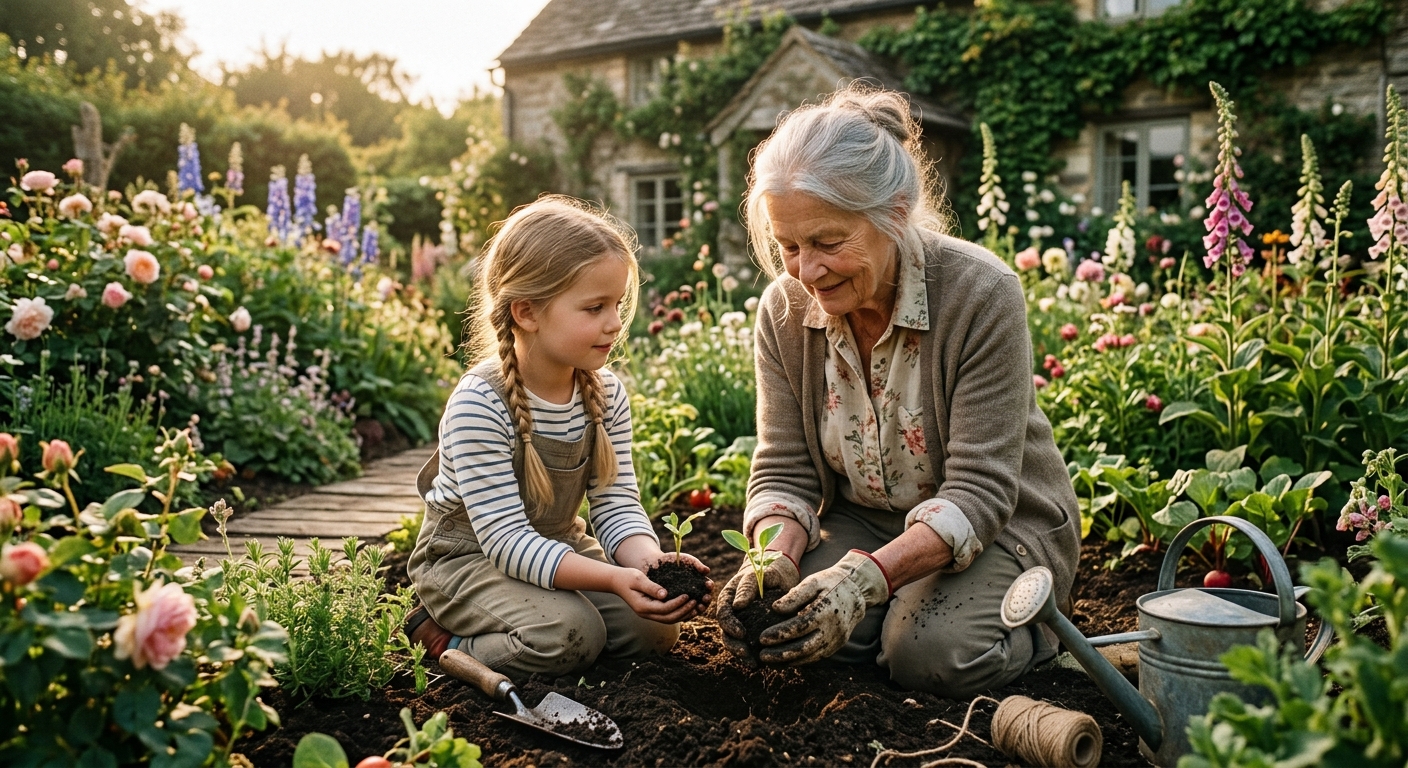
Every Saturday morning, I would trail behind her through the rows of her backyard garden in rural Tennessee, watching her kneel in the dirt with the kind of slowness that made me fidget. She would press seeds into the earth one by one, pat the soil gently like she was tucking something in for sleep, and then stand up, brush off her knees, and walk back inside for a cup of coffee. No fuss. No hurry. Just quiet, deliberate motion and then a long, patient wait.
I remember tugging at her sleeve once and asking, “Grandma, why don’t you plant more at once? Wouldn’t that make it go faster?”
She looked at me over her reading glasses with a small smile and said, “Baby, the garden doesn’t care how fast you want it to grow.”
I didn’t understand that until I was thirty-four years old, burned out from a career I had sprinted into, staring at a life that looked impressive from the outside and felt completely hollow on the inside.
The Woman Behind the Garden
My grandmother, Ruth Elaine Calloway, grew up during the tail end of the Great Depression. She had seen what happened when people grasped too hard at things, when they panicked, when they planted in desperation rather than intention. Her garden was not just a hobby. It was a philosophy she had developed over decades of living, losing, and learning how to begin again.
She grew tomatoes, pole beans, squash, marigolds, and every summer, a single row of sunflowers that she planted purely because she liked how they made her feel. She kept a small handwritten journal where she tracked planting dates, rainfall, and what had worked the previous year. To her, the garden was a conversation, not a transaction.
She never used the word “patience” to describe what she practiced. She would have called it something simpler: paying attention.
What the Garden Actually Teaches You
Looking back now, I can see that every Saturday morning I spent in that garden was a quiet education. Here are the lessons that took root in me, even when I wasn’t paying attention:
1. You Cannot Negotiate With Growth
A tomato plant will not ripen faster because you need it to. A sunflower does not care about your timeline. There is something deeply humbling about working with living things because they remind you, over and over, that not everything responds to pressure. Some things simply need time, and no amount of ambition or anxiety will change that equation.
My grandmother used to say that the garden cured her of urgency. I think what she meant was that it taught her to separate the things she could control from the things she could only tend.
2. Preparation Is a Form of Hope
Every spring, my grandmother would spend two full weekends turning the soil, adding compost, and checking drainage before a single seed went in the ground. I used to think this was excessive. Now I understand it as one of the most optimistic acts I have ever witnessed.
To prepare carefully for something that hasn’t happened yet, something you cannot guarantee, is a profound act of faith. She was betting on the future with her bare hands and a trowel.
3. Neglect and Impatience Are Both Forms of the Same Problem
Here is something most people don’t talk about: impatience and neglect produce the same result in a garden. If you pull a plant too early because you are tired of waiting, it dies. If you ignore it entirely, it also dies. The sweet spot is sustained, attentive care without the obsessive need for immediate results.
That balance, I have come to believe, is one of the hardest things a human being can learn.
4. Not Everything That Goes Into the Ground Comes Up
Some seeds don’t make it. Some plants get taken by frost or disease or just an inexplicably bad season. My grandmother never seemed particularly shattered by this. She would note it in her journal, adjust her approach, and try again the following year.
She did not treat failure as a verdict. She treated it as information.
5. The Waiting Is Part of the Work
This one changed me the most. I spent most of my twenties believing that rest was the absence of productivity. My grandmother showed me something different. The weeks between planting and harvest were not empty time. She was watering, weeding, watching for pests, adjusting stakes, removing dead leaves. The waiting was full of small, consistent actions that made the eventual outcome possible.
Patience, she modeled for me, is not passive. It is one of the most active things you can practice.
The Summer I Finally Got It
The summer I turned thirty-four, I had just left a high-pressure marketing job that had consumed the better part of a decade. I was exhausted in a way that sleep couldn’t fix. I went back to Tennessee and spent two weeks at my grandmother’s house, and for the first time since childhood, I followed her into the garden without my phone.
We didn’t talk much. We weeded. We watered. We checked on things. One afternoon, I watched her stand completely still in the middle of the garden for almost five minutes, just looking. Not doing anything. Just looking.
When she finally moved, I asked what she had been thinking about.
“Nothing,” she said. “I was just letting it be.”
I burst into tears, which embarrassed me and seemed to not surprise her at all.
What I Carry With Me Now
My grandmother passed away three years ago at the age of eighty-eight. I inherited her garden journal, a spiral-bound notebook with a sunflower on the cover, filled with her looping handwriting and decades of observations about what grew well and what didn’t.
I have started my own small garden on my apartment balcony. It is not impressive. I have four containers, some herbs, and two tomato plants that are frankly struggling. But every morning I check on them, water them, note what’s changed, and practice not needing them to be further along than they are.
It is harder than it sounds. Some mornings I have to remind myself three times.
But I think that’s the point. Patience is not a personality trait you either have or you don’t. It is a practice. A daily choice to show up, do the work, and trust the process, even when the process is invisible, even when nothing seems to be happening.
My grandmother knew that. She knew it in her knees and her hands and the quiet way she moved through a space that asked nothing of her except presence.
If You’re in the Middle of a Long Wait Right Now
Maybe you are waiting for a health diagnosis to resolve, a relationship to heal, a career shift to take hold, or a version of yourself you haven’t quite become yet. The waiting can feel like nothing is happening. It can feel like you are falling behind while everyone else moves forward.
But I want to offer you what my grandmother offered me without ever framing it as advice: the ground beneath something growing is never empty. Things are happening at the root level that you simply cannot see yet.
Keep tending. Keep showing up. Try not to pull the plant too early.
The garden doesn’t care how fast you want it to grow, but it will grow. Given time, good soil, and steady attention, it almost always does.