
🎧 Listen to this story
Narrated by Sulafat · 8,171 characters
A Phone Call Nobody Expected
Most parents brace themselves when they see an unknown number from their child’s school pop up on their phone. The stomach drops a little. The mind races. What happened? Is everything okay? But for the parents of students in Kristin Neff’s fourth-grade classroom in a small public school in Columbus, Ohio, that first call of the year carries no dread at all. In fact, many of them say it is one of the most memorable phone calls they have ever received.
On the very first day of school, before the afternoon buses have even pulled away, Kristin begins working through her class list. She calls every single parent or guardian. And instead of reporting a problem, she says something like this: “I just wanted you to know that Marcus made the whole class laugh today during our icebreaker, and I can already tell he has a gift for connecting with people. I’m so glad he’s in my class.”
That’s it. No agenda. No ask. Just a specific, genuine, warm observation about their child on the very first day.
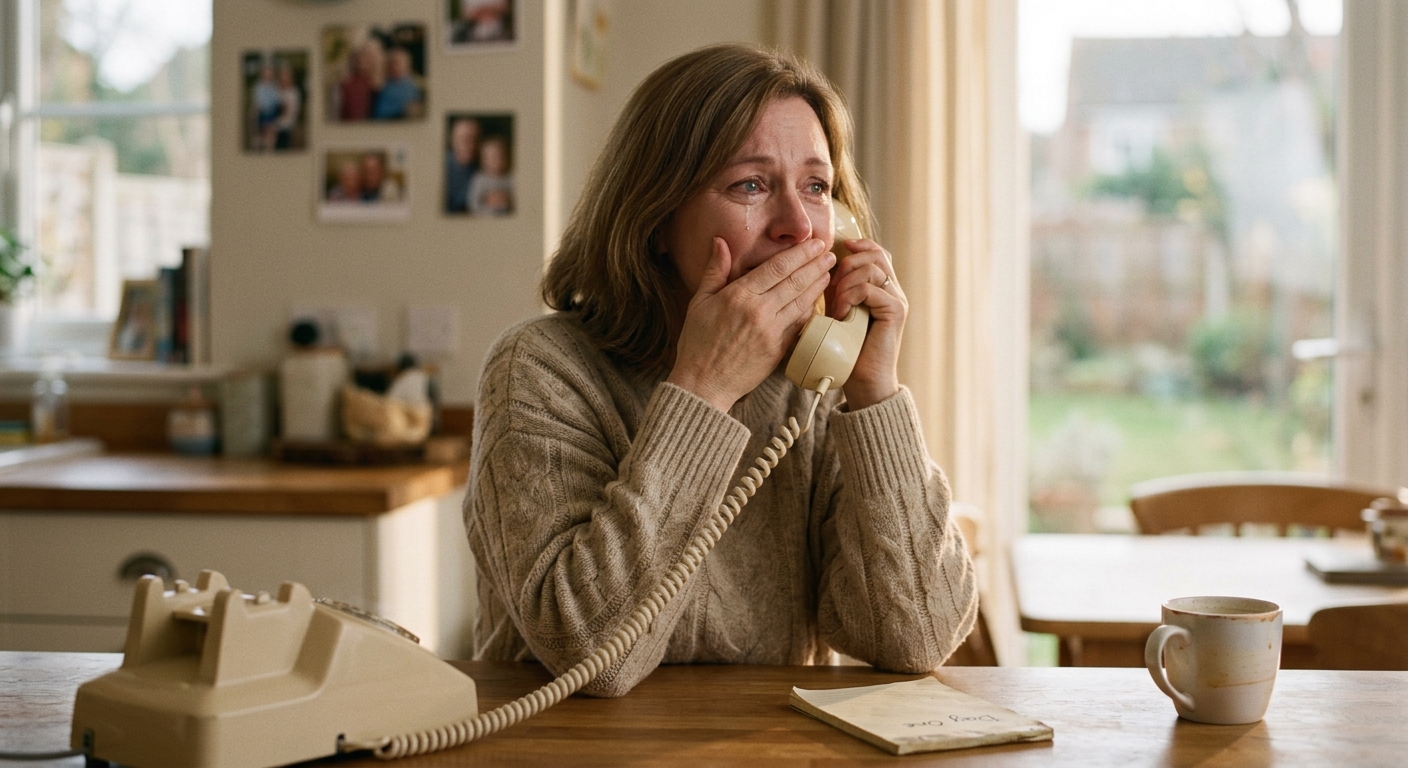
The reactions, she says, are almost always the same. Silence. Then a sharp inhale. Then, more often than not, tears.
Where the Idea Came From
Kristin did not read this strategy in a teaching manual or attend a workshop about parent engagement. It started, she explains, from a painful memory of her own.
“When I was in fifth grade, my teacher called my mom,” she recalls. “And I remember sitting at the kitchen table watching my mom’s face fall. I didn’t even know what I had done wrong yet, but I felt like I had already failed somehow. That feeling stuck with me for years.”
When she became a teacher herself, she made a quiet promise that she would try to change that reflex, that automatic assumption that a call from school means bad news. “I wanted families to pick up the phone when they saw my name and feel good,” she says. “And the only way to make that happen was to earn it early.”
So in her third year of teaching, she tried it. She made twelve calls that first afternoon, each one focused on one real, specific thing she had noticed about each child. She was nervous, she admits. It felt almost too simple. But the response was overwhelming.
“One dad told me he had never, in nine years of his son being in school, received a positive call home. Nine years. I couldn’t stop thinking about that.”
She has made the calls every year since.
Why Specificity Is Everything
It would be easy to assume this is just a feel-good exercise, a quick “your kid was great today” and hang up. But anyone who has spoken with Kristin quickly understands that the power of this practice lives entirely in its specificity.
She does not say “Amara was very well-behaved.” She says “Amara noticed that a classmate looked nervous during introductions and quietly moved her chair a little closer to her. That kind of emotional awareness is rare, and I wanted you to know I saw it.”
She does not say “Javier seems like a smart kid.” She says “Javier asked a question today that made me stop and rethink how I was explaining something. He’s a real thinker, and I can’t wait to see where that takes him this year.”
This level of detail does several things at once. It tells the parent that their child was truly seen, not just managed or processed as one of twenty-five students. It signals to the family that this teacher pays attention. And perhaps most powerfully, it gives parents something real to say to their child at the dinner table that night.
“When you tell a parent something specific, they go home and repeat it word for word,” Kristin says. “And then the child knows: my teacher sees me. My teacher likes me. This is going to be a good year.” Research in educational psychology consistently supports this idea. Students who feel a strong relational bond with their teacher in the first weeks of school show higher engagement, better attendance, and stronger academic outcomes across the board.
What Happens to the Hard Cases
A fair question surfaces quickly in any conversation about this practice: what about the child who truly had a rough first day? What about the student who pushed another kid on the playground, or refused to participate, or cried through most of the morning?
Kristin does not skip those calls. She just looks harder.
“There is always something,” she says firmly. “Always. Maybe the child who struggled all day has incredible persistence. Maybe the one who wouldn’t talk to anyone has the most observant eyes in the room. I look for the thing that is genuinely true, because kids who are struggling need that call more, not less.”
She describes one student, a boy named Derek, who arrived on the first day already labeled by his school file as a behavioral challenge. By mid-morning he had argued with a classmate and knocked a pencil cup off her desk.
“But I also watched him spend ten minutes helping a girl who had dropped all her supplies in the hallway, without anyone asking him to. He didn’t even know I saw him.” That evening, she called his grandmother, who raised him. “I told her what I saw in that hallway. She went completely quiet. Then she said, ‘Nobody ever calls me about the good things.’ I could hear her crying.”
Derek, Kristin says, became one of her most engaged students that year.
The Ripple Effect on the Whole Classroom
What Kristin has discovered over more than a decade of this practice is that the calls do not just change individual relationships. They change the entire climate of the classroom.
When parents feel welcomed and respected from day one, they become partners rather than adversaries. They respond to future communications more readily. They show up to conferences. They volunteer. They give teachers the benefit of the doubt when things get difficult, because they already know this teacher cares.
And children, sensing that their home world and school world are connected in a positive way, tend to feel safer. Safer students take more risks. They ask more questions. They recover faster from mistakes.
“The first call sets the tone for the whole year,” Kristin says. “It’s an investment. It takes me a couple of hours on that first afternoon, but it saves me countless difficult conversations later.”
7 Things Other Educators Have Learned from Kristin’s Approach
- Positive first contact builds lasting trust: Families who receive good news early are more likely to engage openly when challenges arise later.
- Specificity signals genuine attention: Vague praise feels dismissive. Specific observations feel like a gift.
- Every child has something worth naming: The practice of looking for it changes how teachers observe their students from the very first hour.
- The call benefits the teacher too: Actively searching for strengths on day one reshapes how educators see their class, before any negative patterns take hold.
- Struggling students need it most: Children who have had difficult school histories often arrive already defeated. A single genuine positive observation can interrupt that cycle.
- Parents carry it home: Specific praise repeated at the dinner table becomes part of how a child understands themselves.
- It does not require a large time investment: Most calls last three to five minutes. The impact, however, can last an entire school year and beyond.
A Lesson That Extends Far Beyond the Classroom
There is something in Kristin’s approach that reaches past the walls of any school building. It is a reminder that almost everyone is quietly waiting to be seen, really seen, for something good. That parents carry worries about their children that they rarely speak aloud. That a few specific, honest, generous words spoken at the right moment can change the entire shape of a relationship.
It does not take a classroom or a title to practice this. It takes only the willingness to look for what is genuinely good in someone and then take the simple, radical step of saying it out loud.
Kristin is still making her calls. Every first day of school, every year, one child at a time. And somewhere, in living rooms and kitchens and cars pulled over on the side of the road, parents are still pressing the phone to their cheek and crying in the best possible way.