🎧 Listen to this story
Narrated by Sulafat · 7,171 characters
The Phone Call That Started Everything
It was a Tuesday morning in 2013 when Linda Grasso first offered to watch a neighbor’s toddler. Her neighbor, a single mother named Deb, had landed a job interview at a local accounting firm after months of unemployment. The problem was not her resume or her qualifications. The problem was a three-year-old named Marcus who had nowhere to go.
Linda, a retired school librarian living two doors down, did not think twice. She said yes, brewed a pot of coffee, pulled out a bin of old toys from her garage, and spent four hours building block towers and reading picture books while Deb went and nailed her interview.
That was the beginning of something neither of them could have predicted would span more than a decade.
What 12 Years Actually Looks Like
Since that Tuesday in 2013, Linda Grasso, now 67, has provided free babysitting to single parents preparing for job interviews in her community of Westfield, New Jersey. She has never advertised, never created a nonprofit, and never asked for a single dollar. Word simply spread, the way good things tend to do in close-knit neighborhoods.
By her own rough count, Linda has watched over 200 children during that time, ranging in age from six weeks to eleven years old. Some kids she has seen only once. Others have come back multiple times as their parent navigated the difficult journey of rebuilding a career. A few of those children have grown old enough to understand what she did for their families, and some have come back just to say thank you.
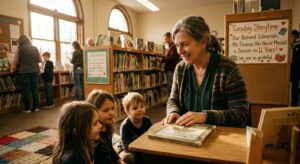
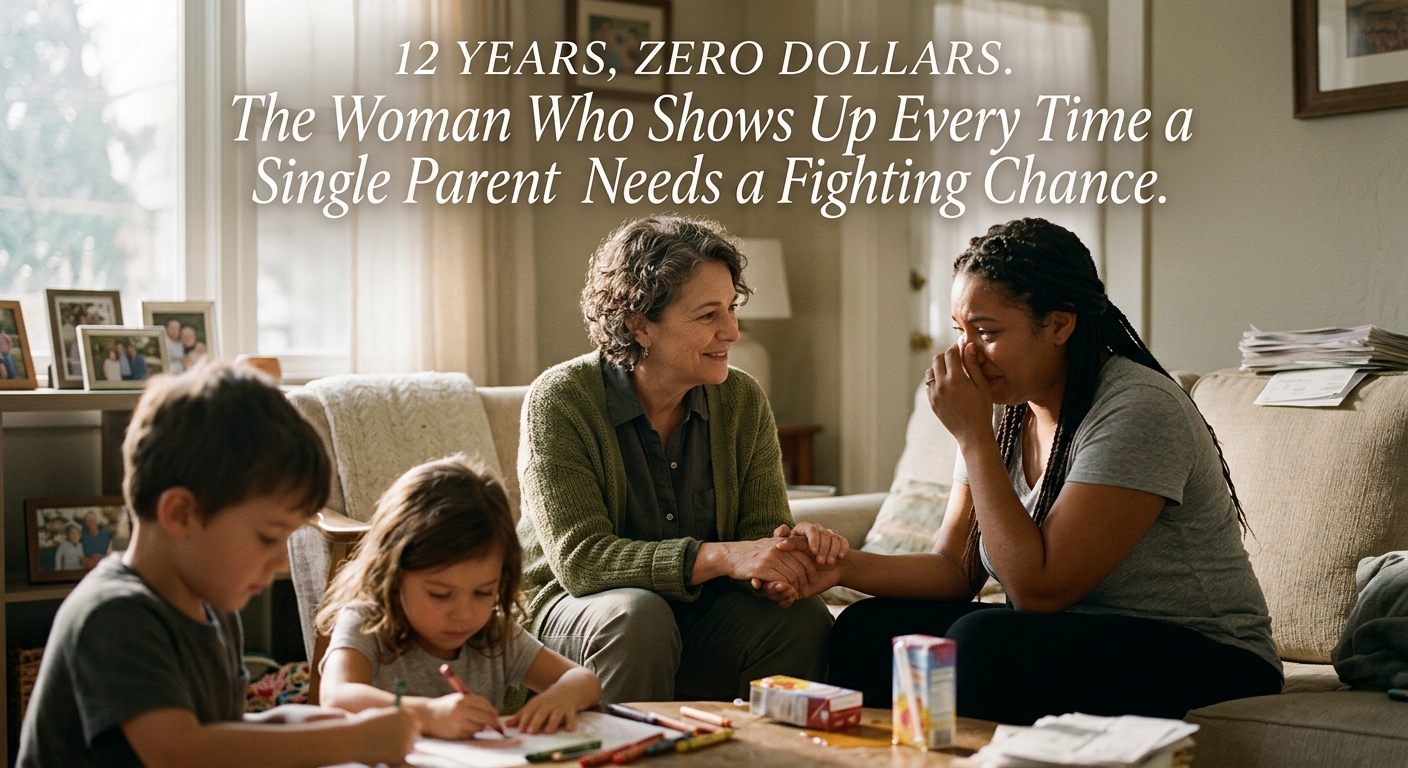
Her living room, which she cheerfully refers to as “the world’s most chaotic reading corner,” is stocked with board books, crayons, a growing collection of stuffed animals, and a basket of snacks she refills every week. She keeps a small whiteboard by the front door where she writes the name of each child she is expecting, so they feel welcomed the moment they walk in.
The Ripple Effect Nobody Talks About
What Linda understands, in a way that many people overlook, is that a job interview is not just a thirty-minute meeting. It is a turning point. For a single parent, the logistics surrounding that meeting can feel insurmountable. Childcare costs alone can make it financially pointless to even show up. A babysitter for a few hours can run anywhere from forty to eighty dollars in parts of New Jersey, and that is money many of these parents simply do not have while between jobs.
“You do not get a second chance at a first impression,” Linda says, “and you cannot make a great first impression when you are panicking about who is watching your kid.”
The parents who have come through her door describe the same thing over and over: arriving at their interview calmer, more focused, and more confident, simply because they knew their child was safe, fed, and happy. That peace of mind, according to several of them, made the difference between getting the job and not.
Voices From the Families She Helped
Rashida Monroe, a single mother of two who used Linda’s help in 2018, is now a registered nurse. She remembers dropping her daughter off on a January morning, terrified of being late for a hospital interview and equally terrified of leaving her shy four-year-old with a near-stranger.
“By the time I got to my car, I could hear my daughter laughing,” Rashida recalled. “I cried the whole drive to the hospital. Not from sadness. From relief. Someone cared enough to make my daughter feel safe so I could go fight for our future.” Rashida got the job. She has since referred four other single parents to Linda.
Then there is Tom Alvarez, a single father who used Linda’s help three times over the course of a year while searching for work after a layoff. “She never made me feel like a charity case,” he said. “She made me feel like a neighbor. There is a difference, and it matters more than people know.”
7 Things Linda’s Story Teaches Us About Community
- Generosity does not require a grand plan. Linda never launched a campaign. She said yes once and kept saying yes. That is the whole origin story.
- Time is often worth more than money. What these families needed was not a check. It was someone physically present, someone reliable, someone warm.
- Small towns still have big hearts. Word-of-mouth networks, informal community trust, and neighbor-to-neighbor care are alive and well when someone models them first.
- You cannot put a price on calm. Walking into an interview without anxiety about your child’s wellbeing is worth more than any interview coaching session.
- Dignity matters in giving. Linda is intentional about making parents feel respected, not pitied. That distinction changes everything about how help is received.
- Consistency builds legacy. One act of kindness is memorable. Twelve years of the same act becomes a permanent part of a community’s identity.
- The return is invisible but real. Linda has no financial reward. What she has is a living room full of crayon drawings, holiday cards from families who made it, and the knowledge that her Tuesday mornings have changed the trajectory of real lives.
Why She Has Never Stopped
People often ask Linda if she ever gets tired. She laughs at the question, not dismissively, but with the kind of warmth that suggests she finds it a little beside the point.
“I was a librarian for thirty-one years,” she says. “My whole career was about opening a door for someone who needed it. This is the same thing. The door just looks different now.”
She is quick to point out that she is not doing this out of sainthood. She is doing it because it gives her mornings purpose, because she misses working with children, and because, as she puts it, “loneliness is its own kind of poverty, and this fixes mine, too.”
That honesty is part of what makes Linda’s story so refreshing. She is not performing generosity for admiration. She is meeting a need in her community while also meeting a need in herself. It is reciprocal in the most human way possible.
What She Hopes Others Will Take Away
Linda is not asking anyone to replicate exactly what she has done. She does not have a website or a hotline. She is not writing a book. But she does have one simple message for anyone reading her story from the comfort of their own life:
“Find the thing that only you can offer and give it freely. For me it was time and experience with children. For you it might be something completely different. But there is always something. There is always someone who needs it. And there is always a Tuesday morning.”
A Legacy Written in Block Towers and Second Chances
In twelve years, Linda Grasso has never kept a formal record of the families she has helped. She does not need one. The records exist in the form of employed parents, stable households, and children who grew up in communities that showed them, early and clearly, that strangers can be kind.
Marcus, the three-year-old from that first Tuesday in 2013, is now fifteen. His mother Deb, who has worked at the same accounting firm ever since, still lives two doors down from Linda. Marcus mows Linda’s lawn every summer. He charges nothing.
Some things, it turns out, are learned without a single word being spoken.