🎧 Listen to this story
Narrated by Vindemiatrix · 6,682 characters
The Year the Floor Gave Out
There is a specific kind of silence that follows collapse. Not the peaceful quiet of a Sunday morning or the stillness after a good cry. This is the silence that settles in when everything you built your identity around is suddenly gone, and the echo of its absence is almost unbearable.
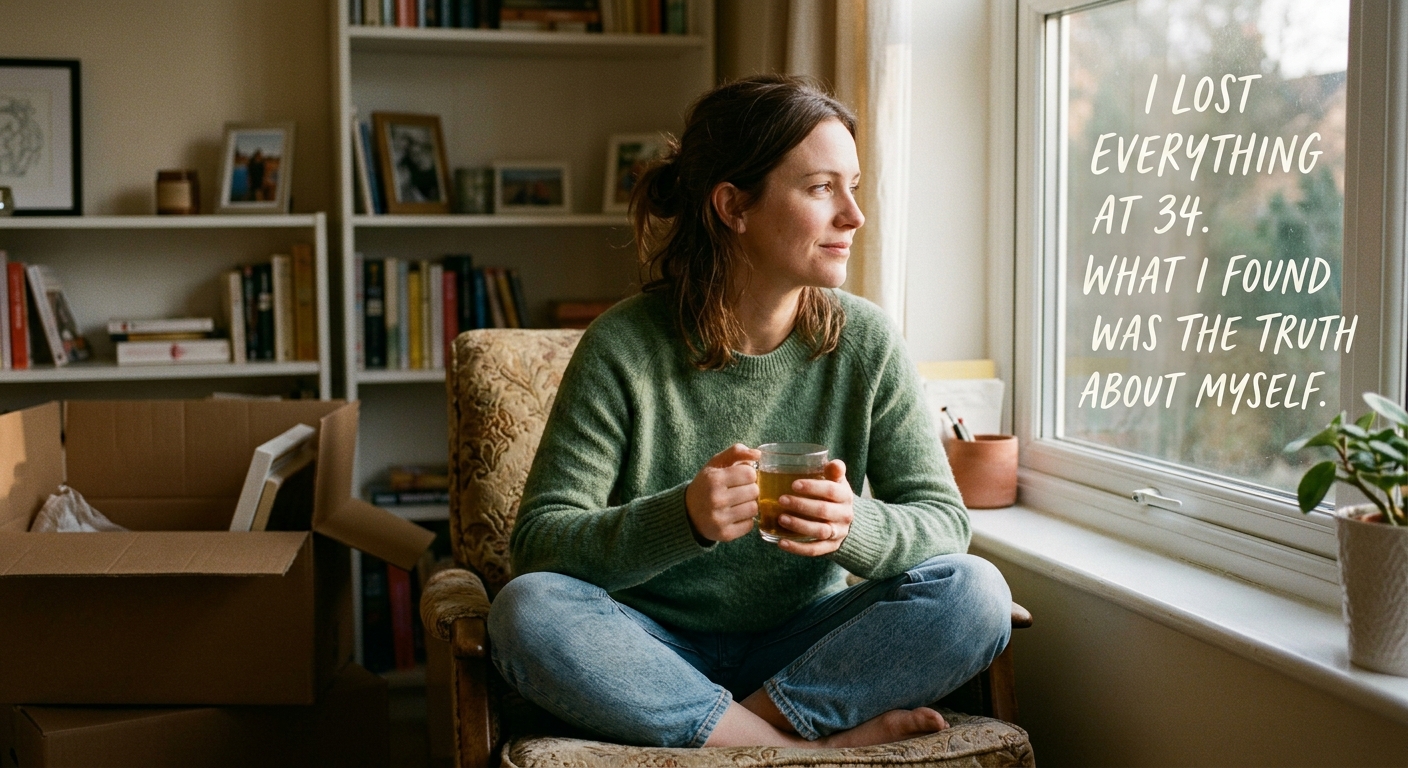
That was 2019 for me. Within eight months, I lost my job of eleven years, watched my marriage dissolve after a slow and painful unraveling, and moved out of the home where I had planned to grow old. I was thirty-four years old, living in my sister’s spare bedroom, staring at a ceiling I did not recognize, wondering how someone who had done everything right could end up here.
What I did not know yet was that “here” was exactly where I needed to be.
The Comfortable Lies We Tell Ourselves
Before everything fell apart, I had what most people would call a good life. Stable income, a partner, a mortgage, a five-year plan. But underneath the checklist of milestones, something had been quietly rotting for years. I was performing a version of myself rather than actually living.
I had taken the job because it paid well, not because it excited me. I had stayed in the marriage long past the point of genuine connection because leaving felt like failure. I had stopped asking myself what I actually wanted somewhere around the age of twenty-six, trading honest self-reflection for the comfort of momentum.
The hard truth is this: the life I lost was not entirely real. It was a careful construction built to satisfy other people’s expectations of what my life should look like. And when it came down, it came down fast.
What Crisis Actually Does to You
We tend to talk about adversity in one of two ways. Either it destroys people, or it transforms them into something inspirational. The reality is messier and far less cinematic. Crisis does not immediately reveal your best self. First, it strips away your defenses.
In the months following my collapse, I was not graceful or enlightened. I was anxious, angry, embarrassed, and deeply confused. I grieved things I did not even like that much when I had them. I second-guessed every decision I had ever made. I called friends at midnight and asked questions I should have been asking myself for years.
But here is what I now understand about that period: it was the most honest I had ever been in my adult life.
Seven Truths the Worst Year of My Life Taught Me
- Comfort and happiness are not the same thing. I had optimized my life for stability and called it fulfillment. Crisis forced me to finally tell the difference.
- Identity built on external things is fragile by design. When the job and the house and the relationship went away, I had to ask: who am I without the props? That question was terrifying and necessary.
- Most of the things you fear losing are things you were already losing slowly. The marriage did not end in 2019. It ended gradually over years of small avoidances. The breakdown was just the announcement.
- The people who stay during the worst of it are your real people. My circle got smaller and more honest. I stopped performing for acquaintances and started being genuinely known by a few.
- Shame is loud, but it is not accurate. I felt like a failure for a long time. But failure implies you were on the right path and fell short. Sometimes you were on the wrong path entirely, and getting knocked off it is a correction, not a punishment.
- Grief and relief can exist at the same time. I mourned the life I lost and simultaneously felt lighter without it. Both things were true. Letting them coexist was one of the most emotionally honest things I have ever done.
- You cannot build something real on a foundation of avoidance. Every hard conversation I had skipped, every instinct I had ignored, every compromise I had made against my own values had contributed to the eventual collapse. Honesty deferred is just a longer path to the same reckoning.
The Rebuilding Was Different
When I eventually began putting a new life together, it looked nothing like the old one, and that was exactly the point. I left the industry I had spent a decade in and started over in something I actually cared about. I moved to a smaller city. I spent a year being single and getting comfortable with my own company, which turned out to be something I had never really done.
The rebuilding was slower and less impressive on paper. There were no promotions to announce, no milestones that photograph well. But every decision I made came from an honest place. I asked myself, before committing to anything, a simple question I had never consistently asked before: Is this what I actually want, or is this what I think I should want?
The gap between those two answers, I discovered, had been enormous.
The Gift That Comes Disguised as Destruction
I want to be careful here. I am not suggesting that suffering is secretly good, or that people going through devastating loss should simply reframe it as a blessing. Pain is pain. Loss is loss. Some things that break us do not lead anywhere redemptive, and that deserves to be acknowledged.
But for me, and for many people I have spoken with since, there is something specific that crisis does that ordinary life rarely manages. It removes the option of pretending. When you have nothing left to protect, you stop protecting things that were never worth protecting in the first place, including the false version of yourself you have been presenting to the world.
That enforced honesty is painful. It is also, in retrospect, the most valuable thing that ever happened to me.
What I Would Tell Someone Standing in the Wreckage
If you are in the middle of your own worst year right now, here is what I wish someone had told me when I was staring at that unfamiliar ceiling:
You do not have to find the lesson yet. The meaning of hard things rarely arrives on schedule. What you can do, right now, is resist the urge to immediately rebuild the same structure that just fell. Sit in the discomfort long enough to hear what it is actually telling you.
Ask the honest questions, even the ones that scare you. Especially those ones. What did I actually want from the life I just lost? What did I keep telling myself was fine when it was not? Where was I living for the story rather than for myself?
The worst thing that happened to you may also be, in time, the thing that finally introduced you to yourself. Not the curated version. Not the one built to impress. The real one, with its contradictions and desires and long-ignored instincts intact.
That version of you has been waiting a long time to be honest. Loss, as brutal as it is, sometimes finally gives it permission.