
🎧 Listen to this story
Narrated by Rasalgethi · 7,468 characters
The Green Secret Sitting on Your Windowsill
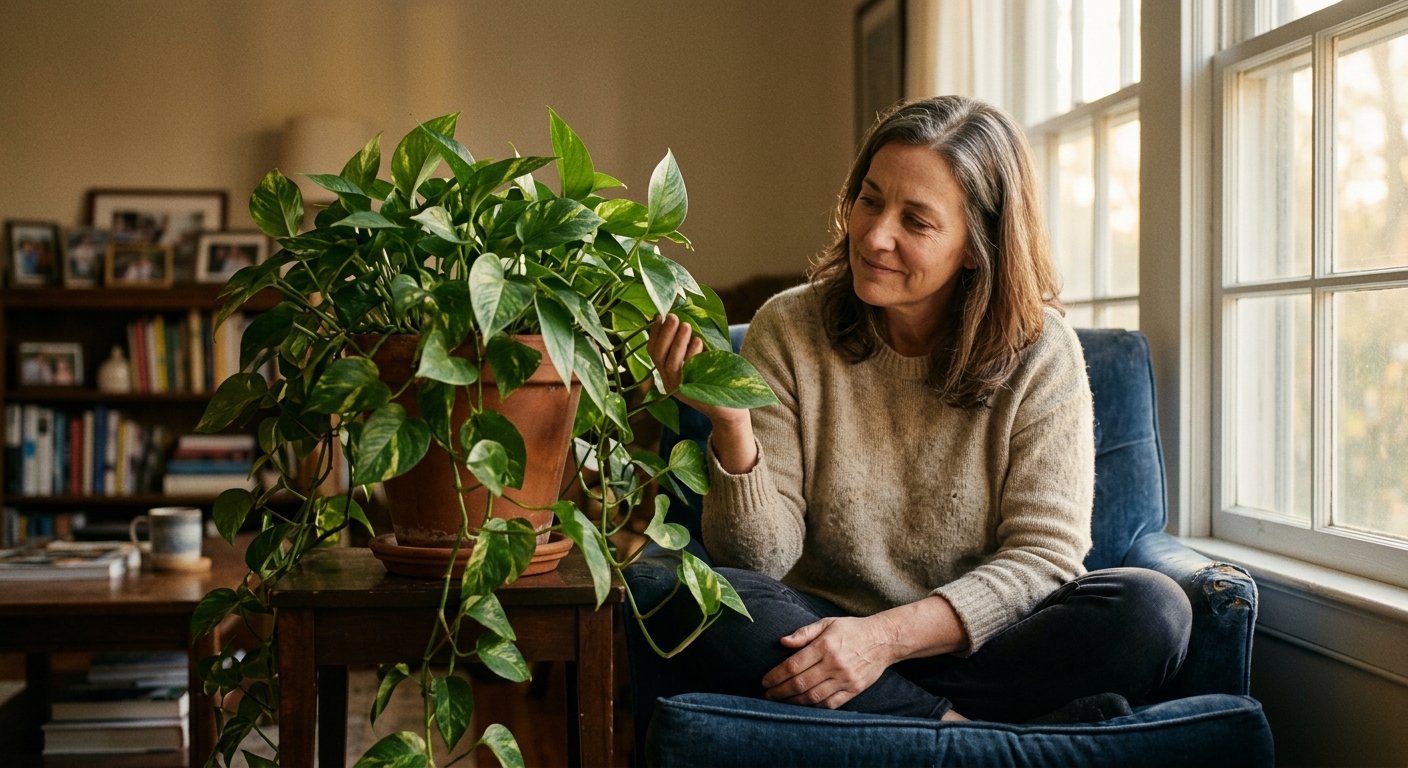
It started as a simple housewarming gift. A small pothos in a terracotta pot, handed over with a laugh and a “try not to kill it.” But three months later, something had shifted. Sleep came easier. The low-grade anxiety that had become background noise started to quiet. And the air in the apartment felt, somehow, cleaner.
Sound familiar? Millions of people have noticed this quiet, unassuming effect that houseplants seem to have on daily life. But what does science actually say about it? Turns out, quite a lot. The health benefits of keeping a plant in your room go far deeper than aesthetics, and researchers have been quietly building a compelling case for years.
What the Research Actually Says
A landmark study by NASA in the late 1980s first put houseplants on the wellness map. Originally designed to find ways to purify air in sealed space stations, the Clean Air Study found that certain plants could remove toxic compounds like benzene, formaldehyde, and trichloroethylene from indoor environments. While follow-up research has refined these findings, the core message remains: plants do something measurable to the air around them.
More recently, researchers at the University of Exeter found that introducing plants into workplaces and living spaces increased productivity by up to 15 percent. A separate study published in the Journal of Physiological Anthropology found that interacting with indoor plants reduced physiological and psychological stress, lowering blood pressure and calming the nervous system in ways that were statistically significant.
These aren’t anecdotes. These are peer-reviewed findings pointing to something most of us have already sensed intuitively but never had language for.
7 Surprising Health Benefits Backed by Science
- Improved Air Quality: Plants absorb carbon dioxide and release oxygen through photosynthesis. Some species also filter volatile organic compounds (VOCs) from the air, reducing indoor pollutants that accumulate from furniture, paint, and cleaning products.
- Better Sleep: Certain plants, like lavender, jasmine, and aloe vera, have been linked to improved sleep quality. Lavender in particular has been shown to slow heart rate and lower blood pressure, creating conditions more favorable to deep rest.
- Reduced Stress and Anxiety: The simple act of caring for a living thing activates the parasympathetic nervous system. Watering, pruning, and observing a plant engages the senses in a grounding, mindful way that interrupts the stress cycle.
- Increased Humidity: Plants release moisture into the air through a process called transpiration. In dry climates or during winter heating season, this natural humidification can ease dry skin, scratchy throats, and respiratory irritation.
- Faster Recovery from Illness: A study from Kansas State University found that patients in hospital rooms with plants reported lower pain levels, less anxiety, and shorter recovery times compared to those in plant-free rooms. The implications for home recovery environments are significant.
- Sharper Focus and Mental Clarity: Research from the Royal College of Agriculture in England found that students in rooms with plants demonstrated 70 percent greater attentiveness. Whether studying, working from home, or simply reading, a nearby plant may be a simple cognitive boost.
- Emotional Regulation: Horticultural therapy, a growing field in mental health care, uses plant care as a therapeutic tool for people dealing with depression, PTSD, and social isolation. The science of why it works points to a deep, evolutionary bond between humans and the natural world.
The Biophilia Connection
To understand why plants affect us so profoundly, you have to understand biophilia. First articulated by biologist E.O. Wilson in 1984, biophilia is the innate human tendency to seek connection with other living systems. We evolved over hundreds of thousands of years surrounded by nature. Greenery, flowing water, and living organisms weren’t decorations in that world. They were signals of safety, resources, and life.
When we remove ourselves from nature entirely, as modern indoor living tends to do, something in us registers the absence. We feel it as a kind of low-level unease we often can’t name. But when we reintroduce even a small element of the natural world into our spaces, the nervous system responds. Not because of placebo or wishful thinking, but because it is, on some level, coming home.
The Best Plants for Your Bedroom Specifically
Not all plants are created equal when it comes to bedroom benefits. Here are a few that researchers and plant therapists tend to recommend most often:
Snake Plant (Sansevieria)
One of the few plants that continues to produce oxygen at night rather than consuming it. This makes it uniquely suited for bedrooms, where overnight air quality matters most. It also requires very little water, making it nearly impossible to neglect.
Peace Lily
A gentle air purifier that also adds moisture to dry air. Peace lilies are known for their calming visual presence and are often recommended in stress-reduction programs. Keep them out of reach of pets, as they can be mildly toxic to animals.
Lavender
The research on lavender’s calming properties is substantial. One study found that sniffing lavender for just three minutes reduced anxiety and improved mood in test subjects. A small potted lavender plant on a nightstand is one of the simplest wellness upgrades imaginable.
Aloe Vera
Beyond its well-known topical healing uses, aloe releases oxygen at night and is associated with improved sleep environments. It also thrives on neglect, needing water only occasionally, which means it rewards even the least attentive plant owners.
Pothos
Perhaps the most forgiving plant in existence, pothos is a trailing vine that filters formaldehyde and other airborne toxins. Its cascading green presence adds visual calm to any corner of a room, and its resilience makes it ideal for beginners.
Starting Small: You Don’t Need a Green Thumb
One of the most persistent myths about houseplants is that you need a special skill to keep them alive. The truth is that most beginner-friendly plants are designed by nature to survive on minimal attention. They ask very little: some indirect light, occasional water, and a corner of your room to call home.
Start with one plant. Set it somewhere you’ll see it every day, near your desk, on your nightstand, or by the window you look out of in the morning. Notice how you feel around it. Notice if the room feels different. Notice if you find yourself pausing to look at it when you need a moment of calm.
That pause is not incidental. It is, according to researchers, the entire mechanism at work. A few seconds of attention directed at something living and green is enough to interrupt the cortisol loop, lower your heart rate, and signal to your nervous system that, for this moment at least, everything is okay.
A Small Green Thing With Surprisingly Large Power
We spend enormous energy and money on wellness: supplements, sleep trackers, meditation apps, and therapy. All of these have their place. But there is something quietly radical about the idea that a ten-dollar plant from a garden center might meaningfully improve your sleep, your stress levels, your air quality, and your mood.
Not because it is magic. Because it is alive. And somewhere deep in your biology, you already know the difference.