🎧 Listen to this story
Narrated by Kore · 7,818 characters
The folding chairs scrape against the linoleum a little after six-thirty each evening. Someone fills the coffee urn. Someone else carries a box of mismatched candles down the narrow stairs and sets them on the long table, because the old church basement has bad overhead lighting and, as the regulars will tell you, nobody in recovery ever wanted to be seen under fluorescent bulbs anyway.
This is the story of a man I will call Daniel, who walked down those stairs on a cold November evening convinced it would be the last place he tried. He shared his story with me over several conversations, and what struck me most was how often he returned to the same word: evening. Evening, he told me, was when everything used to fall apart. And evening, eventually, was when it began to come back together.
The Hour Everything Used to Fall Apart
Daniel’s addiction did not announce itself with a dramatic crash. It crept in over about eleven years, starting with pills prescribed after a back injury at a warehouse job, then moving into things no doctor had ever signed off on. He kept working for a long time. He kept paying rent, mostly. He kept telling his sister he was fine.
The trouble, he explained, always arrived at dusk. During the day there were tasks to hide behind: shifts to work, errands to run, a thousand small obligations that kept his hands busy and his mind quiet. But when the light started to go amber and then gray, the busyness drained away and the craving filled the space it left.
“Evening was the loneliest hour of my life,” he told me. “The sun goes down and the whole world goes inside to be with somebody. I went inside to be with my habit.”
That detail matters, because it is the heart of why the meeting worked. The program did not try to fight the evening. It claimed it.
A Room Built for the Quiet Hours
The church is an unremarkable brick building on a corner lot, the kind of place that has hosted potlucks, scout meetings, and funeral lunches for seventy years. Years ago, the congregation opened the basement to a recovery group that needed a free, dependable space. The group chose an early-evening time slot on purpose. Every night, seven days a week, the door opens at seven.
Nightly is the part that surprised Daniel most. He had tried programs that met weekly, and a week is a long time to be alone with a craving. Here, there was always somewhere to be when the sun went down.
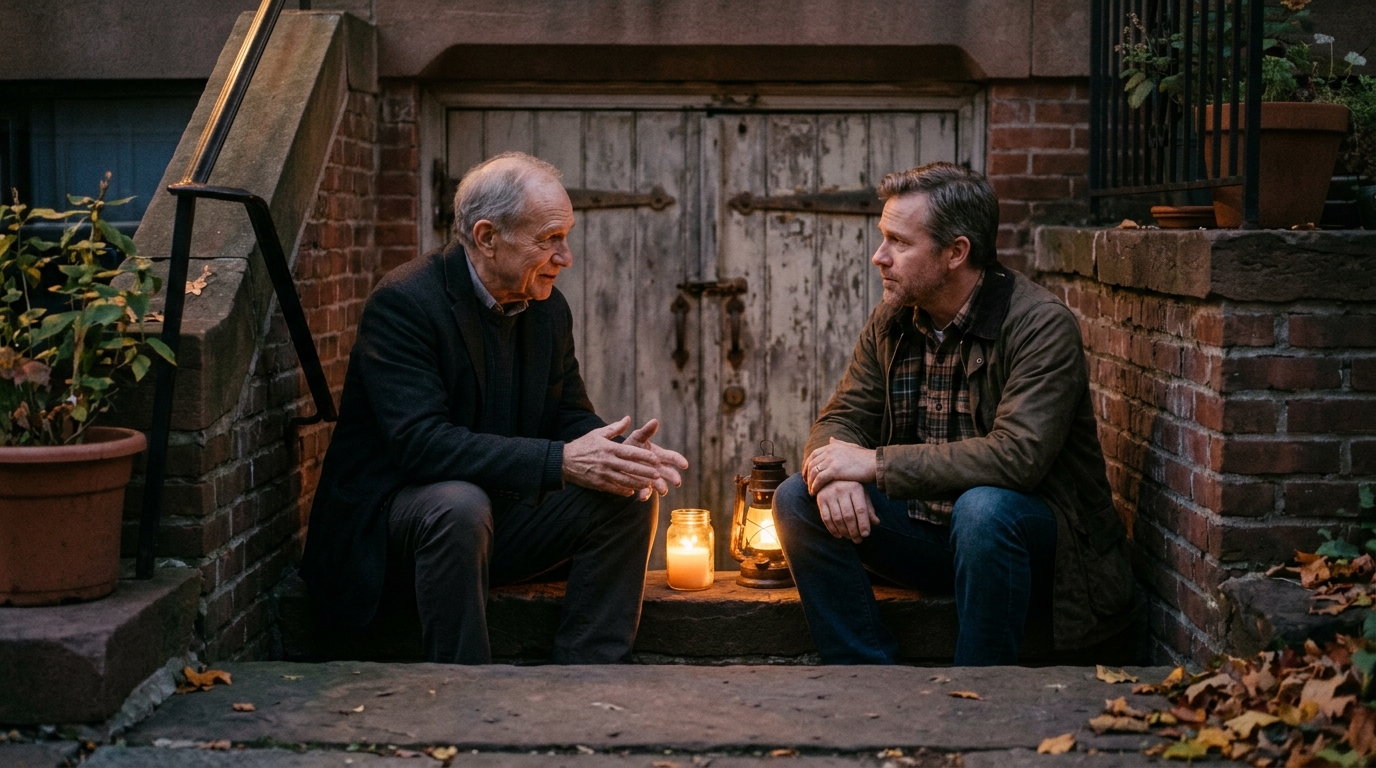
The candles came about by accident, according to one of the longtime members. One winter the basement’s wiring failed during a storm, and the group met by the light of whatever flames could be found. Something about it stuck. People spoke more softly. They listened more closely. They stopped performing and started telling the truth.
So the candles stayed. Now a small ring of flames flickers on the table every night, and the overhead lights stay off.
What Daniel Noticed First
He did not come in believing anything. He came in because his sister had stopped answering his calls and he had run out of excuses to give himself. He sat in the back, near the door, ready to leave.
Here is what he noticed, in his own order:
- Nobody asked him to speak. He had braced for a spotlight. Instead a stranger slid a paper cup of coffee toward him and went back to listening.
- The stories were ordinary. No one was shouting or confessing for drama. People described grocery stores and bad Tuesdays and the small, specific ways they had gotten through the day.
- The candlelight softened everyone. Faces that might have looked hard or tired looked kind. He realized, with some surprise, that he was doing the same to them.
- Time was marked in evenings. People did not say they had been clean for a year. They said they had made it through three hundred sixty-five evenings.
That last one stayed with him. Recovery, when you stretch it across a lifetime, is impossible to imagine. But one evening? One evening he could do.
The Night He Finally Spoke
It took him nineteen days to say a word. He remembers the date because he had been counting, the way you count steps on a staircase you are afraid to look down from.
That night a woman across the table spoke about her daughter, about missing a recital, about the particular shame of being present in body and absent in every other way. Daniel felt something loosen in his chest. When the room went quiet and it was his turn, he opened his mouth and said only this: “I think I called my sister every night for a year just to hear if she’d pick up, and she did, and I never said thank you.”
No one clapped. No one rushed to fix him. A man two chairs down simply nodded and said, “Yeah. Us too.”
That single sentence, us too, did more than any lecture or ultimatum had ever done. It told him he was not an exception, not a lost cause, not uniquely broken. He was one flame among several on a long table.
The Small Rituals That Hold a Person Up
Recovery, Daniel says, is mostly made of unglamorous habits that stack up quietly. The meeting gave him a structure to hang them on:
- Showing up before he felt ready. He went on nights he did not want to, which turned out to be the nights that mattered most.
- Arriving early to help. Setting out chairs and lighting candles gave his hands something to do and gave him a role. Being useful, he learned, is its own medicine.
- Calling his sister. Not at midnight in crisis, but at a reasonable hour, to say something small and true.
- Taking the walk home slowly. After each meeting he walked the long way, watching the streetlights come on, learning that the evening could be gentle when he was not running from it.
That last habit is the one he returns to when he talks about healing. For years, dusk meant dread. Now it means the walk home, cold air on his face, a coffee warming his hands, and the quiet understanding that he got through another day.
What the Candles Taught Him
I asked Daniel what he thinks about when he blows out the flames at the end of the night. He was quiet for a while, the way people are when they are deciding whether to be honest.
“A candle doesn’t light up the whole room,” he said. “It just lights up enough to see the next step. That’s all I ever needed. Not the whole road. Just enough light to see where my foot goes next.”
It is an idea worth sitting with on any ordinary night. We spend so much of our lives demanding to see the entire path before we will move, and so much of healing, it turns out, happens in the small circle of light right in front of us.
Where He Is Now
Daniel has been in recovery for just over three years. He still goes to the basement most evenings, though now he is often the one who arrives early to set out the chairs. When a newcomer slips in at the back, ready to bolt, he is usually the one who slides over a paper cup of coffee and says nothing at all.
His sister comes to dinner on Sundays. He fixes the meal. She does not ask him how it is going anymore, because she can see it.
An Evening Reflection
If tonight is hard for you, or for someone you love, consider this your gentle nudge from a stranger who believes in you. The evening does not have to be the enemy. For many people, the hour that once held the most pain becomes the hour they heal in, once they find the right room and the right company.
And if you are the steady one, the person who sets out chairs, lights candles, and slides over a cup of coffee without a word, know that you may be the reason someone makes it to morning. You will probably never be thanked for it. That is how the quiet heroes of the evening work. They show up, they keep the lights low, and they stay until everyone has found their way home.
Tonight, as the day winds down and the house goes still, take a moment to think about the small light you can offer someone, and about the small light someone has already offered you.