🎧 Listen to this story
Narrated by Kore · 7,462 characters
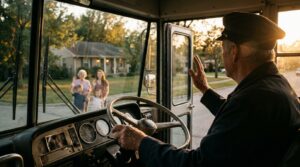
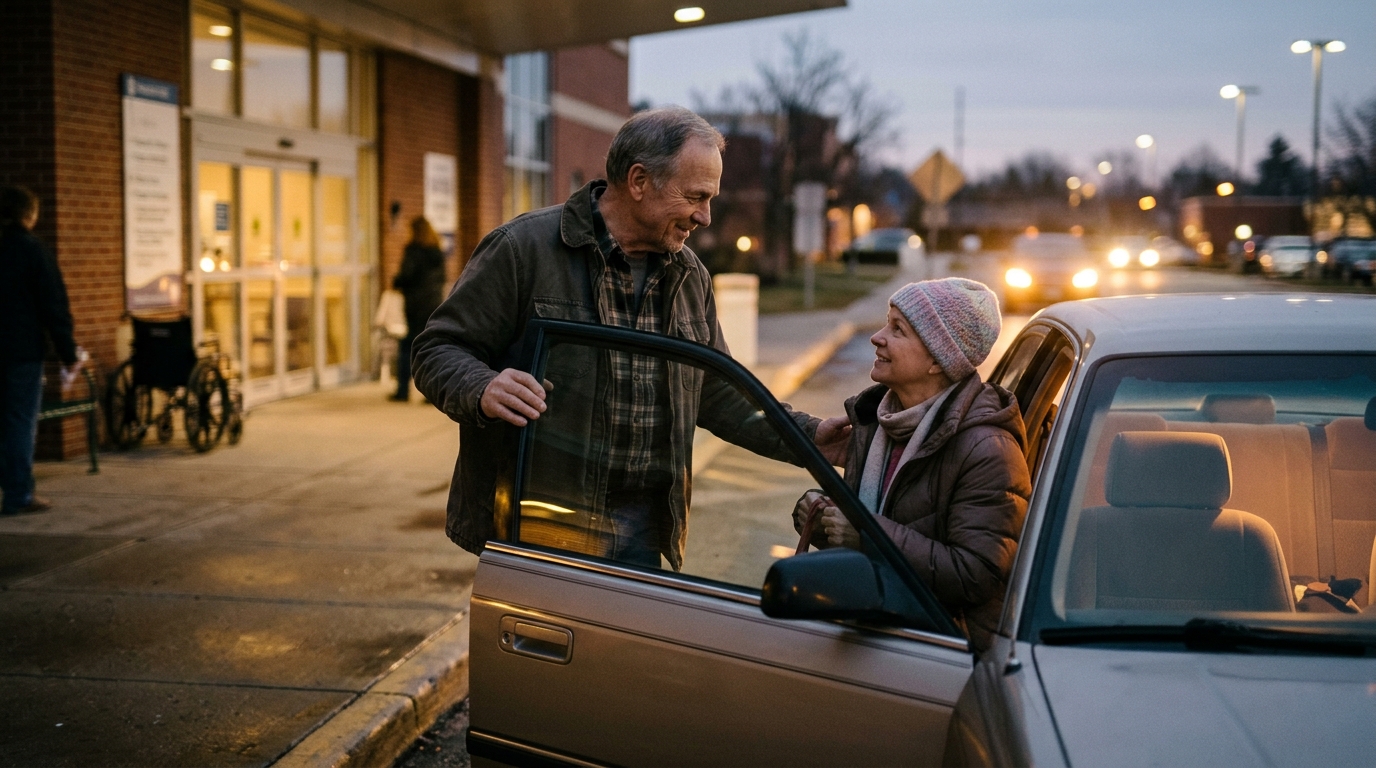
At 4:45 every afternoon, while most of the world is thinking about dinner and traffic, a man named Walter Brennan is already warming up the engine of a modest gray sedan. He tucks a thermos of tea into the cup holder, checks that the back seat blanket is folded and ready, and heads out to pick up someone who is about to have one of the hardest hours of their week.
Walter is a volunteer driver for a community ride program that carries cancer patients to and from their treatments. He has done this nearly every evening for ten years. In that time, according to the program coordinators who keep the logs, he has not missed a single scheduled ride.
This is the story of what that kind of steadiness looks like, and what it quietly builds.
How It Started
Walter did not set out to become anyone’s hero. He retired from a career as a municipal bus mechanic, a job that taught him patience, punctuality, and the particular satisfaction of keeping something reliable. A few months into retirement, he found himself restless.
His sister had gone through treatment the year before, and Walter remembered how the logistics nearly broke her family. Rides fell through. Relatives took unpaid days off. One week she waited forty minutes at a curb because her ride got stuck in traffic and could not reach a phone.
So when he saw a flyer at the library asking for volunteer drivers, he picked up the phone before he could talk himself out of it.
“I wasn’t looking to change my life,” Walter says. “I just thought, somebody should be there on time. I can be on time.”
Why Evenings?
Most volunteers prefer morning appointments. The roads are quieter, the day is fresh, and the rest of the schedule stays open. Evening slots, the last treatments before the clinic closes, were the ones that kept going unfilled.
Walter took them on purpose.
“People forget that the evening ride is a different kind of ride,” he explains. “In the morning, folks are nervous but they have the whole day ahead. At night, they’re tired, they’re sore, sometimes they’re sick. They just want to get home and lie down. Nobody should have to worry about how they’re getting there.”
The evening drive home has its own rhythm. The sky goes soft and orange over the parking lot. The radio gets turned down low. Some patients doze against the window. Others talk, because the dark makes it easier to say the things they cannot say in daylight.
What the Back Seat Hears
Over a decade, Walter has driven hundreds of people. He keeps no list of names for the sake of privacy, but he remembers them all the same.
- The retired schoolteacher who corrected his grammar for six months straight and made him laugh harder than he had in years.
- The young father who asked Walter to stop on the way home so he could sit and watch the sunset for ten minutes, just to feel normal.
- The woman who rode in silence for three weeks, until the fourth when she suddenly began to talk and did not stop until they reached her driveway.
- The man who brought homemade bread on his final week of treatment, wrapped in a dish towel, because he did not know how else to say thank you.
Walter has learned to read the car like a room. Some evenings call for conversation. Some call for nothing at all. He has become fluent in the language of just being there.
The Rules He Keeps
Reliability, for Walter, is not an accident. It is a practice. Over the years he has built a small set of habits that he follows without exception.
He arrives early, always
Fifteen minutes ahead of schedule, every time. A patient should never stand at a window wondering if the ride is coming.
He prepares the car
The seat warmer is on in winter. A plastic bag and tissues are within reach. The temperature is set to whatever the passenger prefers, and he asks every single time, because preferences change on bad days.
He plans for the unexpected
Walter keeps a backup route for every trip, a full tank of gas, and a phone charger. Twice he has had a flat tire and changed it in under fifteen minutes in his good shoes so a patient would not miss an appointment.
He never treats it like a favor
This is the one he repeats most. “They are not a burden,” he says. “They’re my neighbors. I’m just lucky enough to be the one holding the keys.”
The Day He Almost Missed One
There was one evening, six years in, that nearly broke the streak. Walter woke with a fever and a cough that rattled his whole chest. His wife told him to call in. The coordinator would find someone else.
He did call in, and a substitute was arranged. But by late afternoon he could not sit still. He felt, in his words, “like I’d left the stove on.” He checked in with the coordinator, learned the replacement driver had run into a scheduling gap, and drove himself out wearing a mask and two sweaters, windows cracked, to pick up a patient who had no other option that night.
The patient never knew. Walter never told her. He went home and slept for fourteen hours.
“That’s not heroism,” he insists. “That’s just not wanting to be the reason someone’s evening falls apart.”
The Quiet Weight of the Ride Home
There is something about the end of the day that softens people. When the sun drops and the clinic lights fade in the rearview mirror, the armor comes off a little. A patient who spent the afternoon being brave for the nurses, brave for the family, brave for the doctors, can finally exhale in the back of a quiet car.
Walter understands this. He does not try to fill the silence. He lets the evening do its work.
“The best thing I can give somebody at the end of a day like that,” he says, “is a steady hand on the wheel and nowhere they have to be except home.”
What Ten Years Teaches You
When asked what he has learned, Walter takes a long moment before answering.
“That showing up is most of it,” he says. “People think kindness has to be big. A donation, a speech, a miracle. But for somebody going through chemo, a ride that arrives exactly when it’s supposed to is a small miracle. It’s one less thing to be afraid of.”
He has also learned something about himself. The man who once thought retirement meant slowing down has found that his days now have a shape, a purpose, and a rhythm he would not trade for anything.
A few things his passengers have taught him
- Courage is rarely loud. It often looks like a person in a coat, buckling a seatbelt.
- Gratitude does not need many words. A hand on the shoulder from the back seat can carry a whole sentence.
- Ordinary reliability is its own form of love.
An Evening Reflection
As you settle in tonight, maybe the lights are low and the day is finally quieting down, consider the people in your own life who show up without fanfare. The ones who are simply, steadily there, year after year, doing the unglamorous work of being dependable.
You might be one of them. You might need one of them. Either way, there is a small, lasting comfort in knowing that somewhere out there, at this very hour, a gray sedan is pulling into a driveway on time, a door is being opened, and someone who is very tired is being carried gently home.
Walter will do it again tomorrow. And the day after that. The ride is already on the schedule.
If his story moves you, consider reaching out to a local volunteer driver program in your community. Most of them are always looking for people with a reliable car, a little patience, and an open evening. You might find, as Walter did, that the road home is where the best parts of life quietly happen.