🎧 Listen to this story
Narrated by Kore · 5,907 characters
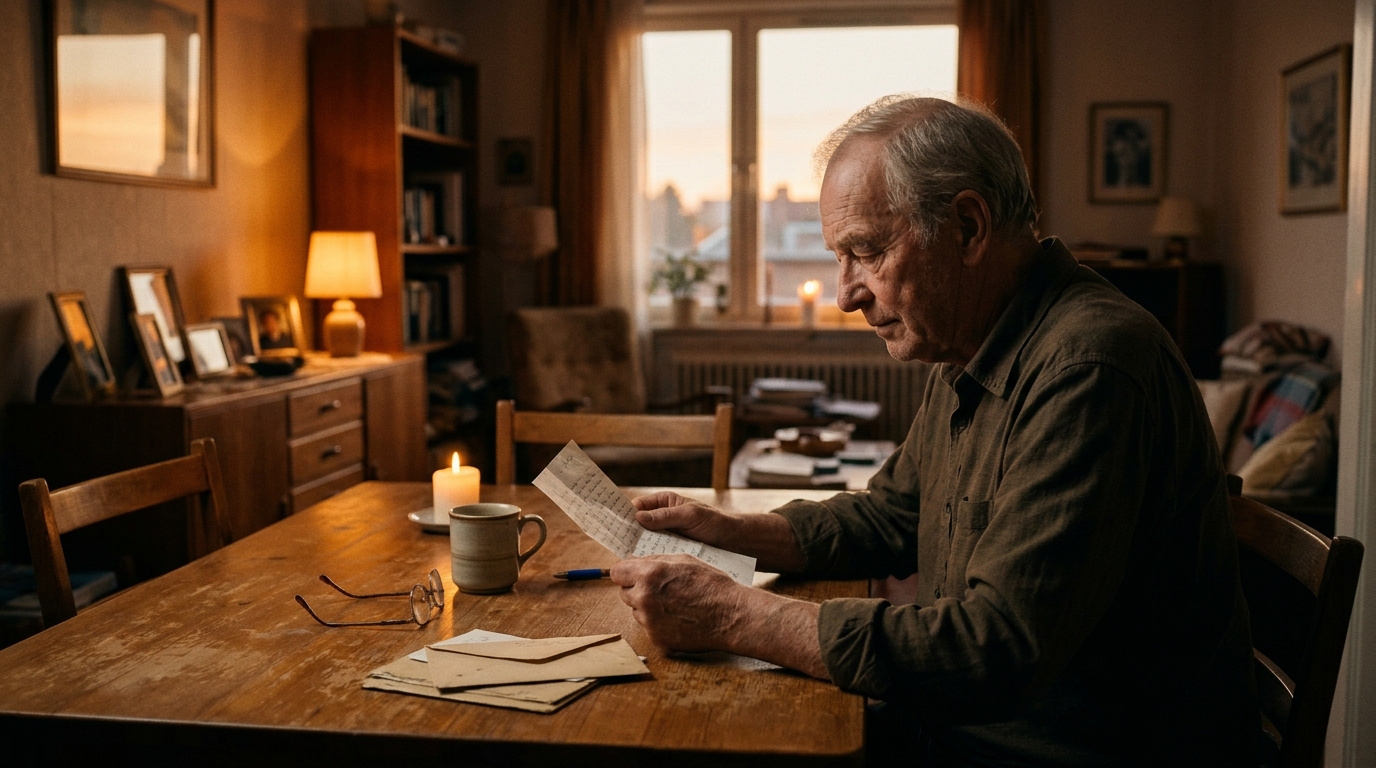
There is a particular kind of quiet that arrives around nine in the evening, once the dishes are dry and the last light has drained from the kitchen window. For most of my life I filled that quiet with television, with phone calls, with errands I invented so I would not have to sit still. It was only after my house went truly silent that I finally understood what forgiveness actually asks of us.
This is the story of how my father and I stopped speaking for eleven years, how I rehearsed a speech in my head for nearly two decades, and what I learned in the evenings after he was gone.
The Argument That Became a Wall
It began over something small enough that I am almost embarrassed to name it. A family gathering, a careless remark about my choices, a sharp reply from me. Words were thrown that cannot be unthrown. My father, a proud and stubborn man who had never once said he was sorry in front of me, folded his arms and went silent. I grabbed my coat and left.
I told myself I was waiting for him to call. He, I later learned, was waiting for me. We were two people standing on opposite sides of the same wall, each convinced the other should knock first.
Years slid by. Birthdays passed with a card, then without one. I got married, and he heard about it secondhand. My daughter was born, and he saw her photograph on my aunt’s refrigerator before he ever held her. Every time I thought about reaching out, I rehearsed the opening line, and every time I decided the moment was not right.
The Call I Did Not Expect
When the phone finally rang, it was my aunt, and her voice was gentle in a way that told me before she spoke. My father had been ill for some time. He had asked her not to tell me. He did not want, she said, to be a burden to a daughter who had not asked for him.
I drove through the night. I arrived at a hospital room washed in the pale blue of early morning, and there he was, smaller than I remembered, his big hands resting on the blanket like tools set down at the end of a long shift. He opened his eyes, looked at me, and said only, “You came.”
I had rehearsed a speech for years. It dissolved completely. I took his hand instead, and we sat in silence while the sun climbed the window. It was the most honest conversation we ever had, and neither of us said a word.
What the Quiet Taught Me
He lived four more weeks. We never had the grand reconciliation I had imagined, the tearful exchange of apologies, the neat resolution. We had small things instead: a cup of tea he could barely lift, a story about his own father he had never told me, a long silence on a Tuesday evening that felt like a kind of prayer.
After the funeral, I came home to a house that felt different. No phone ringing, no one to call, no more speeches to rehearse. And in that stillness, sitting on the edge of my bed with the lamp low, something settled into place that the noise of the previous eleven years had kept from me.
Here is what I understood, finally, in the quiet.
Forgiveness Is Not an Event
I had been waiting for a single dramatic moment, a scene from a film in which two people embrace and everything is made right. Real forgiveness, I learned, is rarely that tidy. It is a series of small decisions: to pick up the phone, to sit in the room, to hold a hand without demanding an explanation. It happens in ordinary minutes, not grand ones.
The Apology You Are Waiting For May Never Arrive
My father never said he was sorry. Not once, not even at the end. For years that absence felt like a debt he owed me. But sitting in the evening quiet, I realized he had been saying it all along in the only language he knew: the coat left on my chair when I visited as a child, the repaired bicycle, the way he asked my aunt, every single month, for news of me. I had been so busy waiting for the words that I missed the translation.
Forgiving Is Something You Do for Your Own Peace
I used to believe that forgiving him meant letting him off the hook. Now I think it simply meant setting down a weight I had been carrying so long I no longer noticed it. The anger had not been punishing him. It had been quietly costing me eleven years of dinners, birthdays, and ordinary Tuesdays.
Small Practices for the End of the Day
Since then, I have made a habit of using the evening hours differently. When the house goes quiet, I no longer reach for noise. If you are carrying a grievance of your own, you might try something similar.
- Sit with the quiet for five minutes. No phone, no screen. Notice which person or memory rises to the surface first. That is often the one that needs your attention.
- Write the unsent letter. Say everything you never could, then fold it away or let it go. The point is the release, not the delivery.
- Look for the translation. Ask yourself how the other person may have been trying to love you in a way you did not recognize.
- Make one small gesture. A message, a card, a single sentence. Forgiveness grows from small acts, not grand declarations.
- Forgive yourself, too. Many of us carry regret for the years we spent waiting. Those years are gone. Tonight is not.
The Lamp Still Burns
I think about my father most in the evenings now. Not with the old ache, but with something closer to warmth. Sometimes I catch his habits in myself: the way I rest my hands, the way I go quiet when I am hurt. I used to resent that resemblance. Now I find it comforting, a thread that runs through the years and the silence and ties us together anyway.
If there is someone in your life you have not spoken to, someone you are waiting on or who may be waiting on you, I hope you will not wait for a hospital room to understand what I did. The wall between you is rarely as solid as it feels. Often it is just two people, each listening for a knock that neither dares to make.
Tonight, when your own house goes quiet, listen closely to what rises up. Then be brave enough to knock first.