🎧 Listen to this story
Narrated by Kore · 6,219 characters
There is a particular hour of the evening when a small town exhales. Dishes are dried, porch lights flicker on, and the day’s noise drains out of the streets like water from a tub. Most of us use that hour to wind down. Marguerite Delacroix uses it to begin.
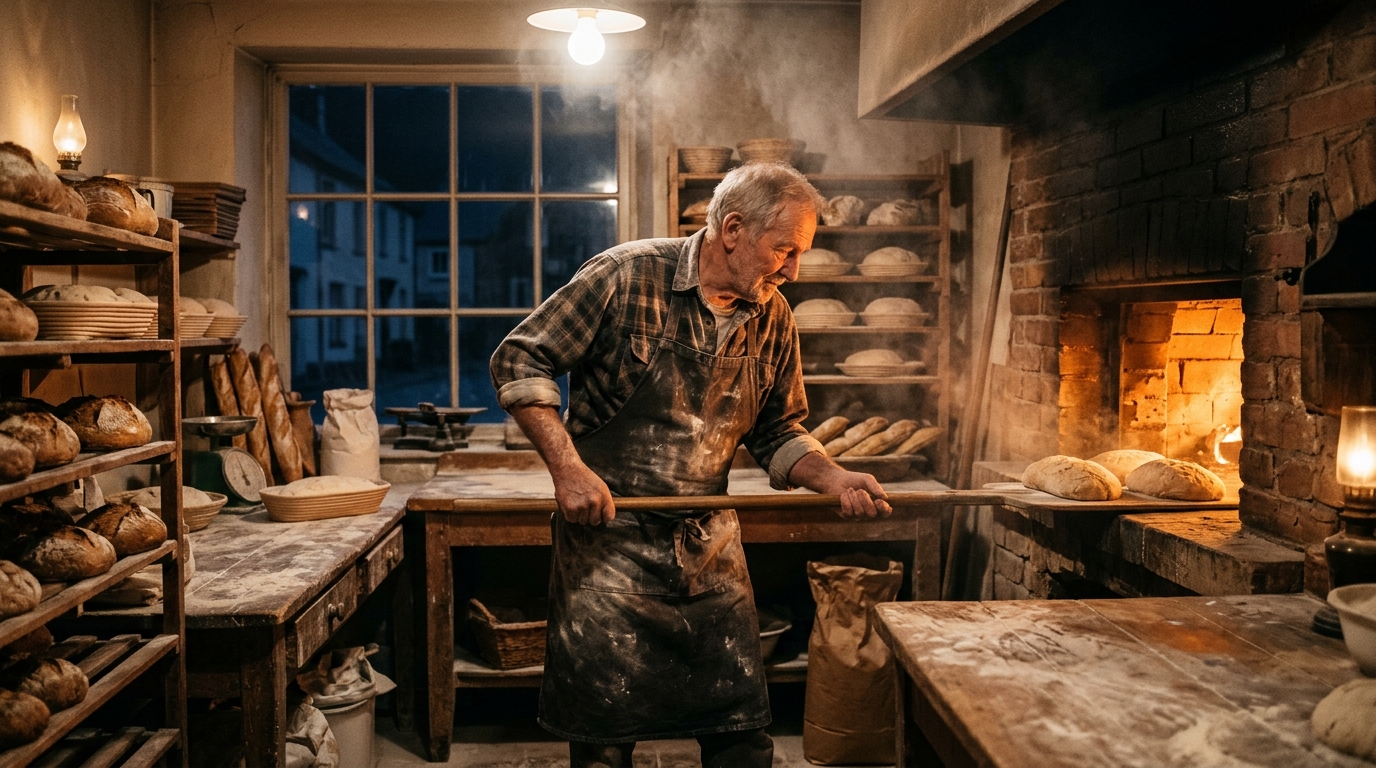
She is sixty-three years old, and by the time most of her neighbors are brushing their teeth, she is already tying on a flour-dusted apron in the back kitchen of a modest brick building on Alder Street. What follows is a quiet, tireless ritual that has fed an entire community for nearly eleven years, and she has never once asked to be paid for it.
The Hour When the Town Goes Still
Picture the scene as dusk settles. The sky over the rooftops turns the color of a ripe peach, then dims to lavender, then to ink. Shopkeepers flip their signs to closed. Somewhere a screen door clicks shut. This is the moment Marguerite lets herself in through the side door, flips on a single warm lamp, and begins to measure flour by feel.
She says the evening is her favorite part. ‘People think I’m sacrificing my nights,’ she told me, laughing, ‘but the nights are when I get to be useful. Everyone else is resting, and I get to prepare something for them to wake up to. It feels like tucking the whole town in with a gift.’
That image stayed with me long after I left her kitchen. A gift waiting quietly in the dark, set down by someone you may never see.
How It All Began
The story starts with a loss. Marguerite’s husband, Étienne, was a retired mill worker who had a habit of leaving fresh bread on the doorsteps of elderly neighbors who could no longer walk to the market. When he passed away, those neighbors stopped receiving their loaves, and nobody said a word about it.
Marguerite noticed. One cold evening, she mixed a batch of his favorite recipe, baked it through the night, and walked the loaves around the block before sunrise. She left them on the same doorsteps without knocking.
‘I didn’t plan for it to become anything,’ she says. ‘I just couldn’t stand the idea of those porches sitting empty.’
A Night in the Life of the Overnight Baker
Her routine is as steady as a heartbeat. Here is how a typical night unfolds:
- 8:30 p.m. Marguerite arrives, lights the ovens, and sets out her ingredients in neat rows.
- 9:00 p.m. The first doughs are mixed and left to rest under damp cloths, puffing slowly in the warmth.
- 11:00 p.m. Shaping begins: crusty country loaves, soft sandwich bread, and a tray of cinnamon rolls for the school drop-off line.
- 1:30 a.m. The first loaves come out of the oven, and the whole street smells like comfort.
- 3:30 a.m. Boxes and paper bags are packed and labeled by hand, each with a small note.
- 4:30 a.m. A handful of volunteer drivers collect the deliveries.
- 5:30 a.m. Marguerite sweeps the floor, turns off the lamp, and walks home as the sky begins to pale.
By the time the sun clears the hills, hundreds of households have bread waiting at their doors.
Who Gets the Bread
There is no application and no waiting list. The bread goes to the night-shift nurse who gets home at dawn, the widower who has stopped cooking for one, the family stretching a paycheck, the new mother running on three hours of sleep, and the firehouse crew finishing an overnight watch.
The notes tucked into each bag are short and unfussy. ‘Thinking of you.’ ‘You’re doing better than you think.’ ‘Butter is in the fridge, you deserve the good kind.’
One recipient, a retired teacher named Walter, keeps every note in a shoebox. ‘I live alone now,’ he said quietly. ‘Waking up to bread at the door and a few kind words reminds me that someone out there knows I exist. That matters more than the loaf.’
Asking for Nothing
Over the years, people have tried to pay her. They have left envelopes of cash, gift cards, even a hand-knitted scarf the size of a small blanket. Marguerite accepts the scarf and politely returns the money.
‘If I took payment, it would become a business,’ she explains. ‘Then it would be about whether people can afford it. I want it to be about whether people need it. Those are very different questions.’
Flour and butter are funded by a small jar at the local hardware store and by neighbors who quietly drop off sacks of supplies. She never counts what comes in. ‘The town takes care of the bread, and the bread takes care of the town,’ she says. ‘It’s a good circle.’
What the Quiet Teaches
When I asked Marguerite what she has learned from all those years of working while the world sleeps, she paused for a long moment, hands resting on a mound of dough.
‘That the biggest kindnesses are usually silent,’ she said. ‘Nobody claps at four in the morning. There’s no audience. And somehow that makes it purer. You do it because it’s right, and the doing is the whole reward.’
There is a lesson in that for the rest of us, especially in the soft hours before bed when we replay our days and wonder whether we did enough. Maybe the measure of a good day is not how loudly we helped, but whether we left something warm behind for someone to find in the morning.
Small Ways to Borrow Her Spirit Tonight
- Before bed, write one short, kind note and slip it somewhere a loved one will find it tomorrow.
- Bake or buy something small and leave it on a neighbor’s doorstep without signing your name.
- Check in on someone who lives alone, even if it is just a quick text.
- Ask yourself one gentle question as the lights go down: who could I make a little less lonely tomorrow?
The Last Loaf of the Night
On the evening I visited, I stayed until the final tray came out. Marguerite wrapped one last warm loaf in brown paper, wrote a note, and handed it to me. ‘For the road,’ she said.
I ate a piece sitting in my car while the town slept around me, the streetlamps humming and the first faint gray creeping into the east. It was, without exaggeration, the best bread I have ever tasted. But what I will remember is the feeling of being looked after by a stranger who asked for nothing.
Somewhere on Alder Street tonight, the oven is already warming. The town is winding down, unaware that a quiet gift is on its way. And at the edge of every sunrise, a baker walks home with flour on her sleeves and a full heart, ready to do it all again.