
🎧 Listen to this story
Narrated by Vindemiatrix · 8,997 characters
The Furry Prescription Nobody Warned You About
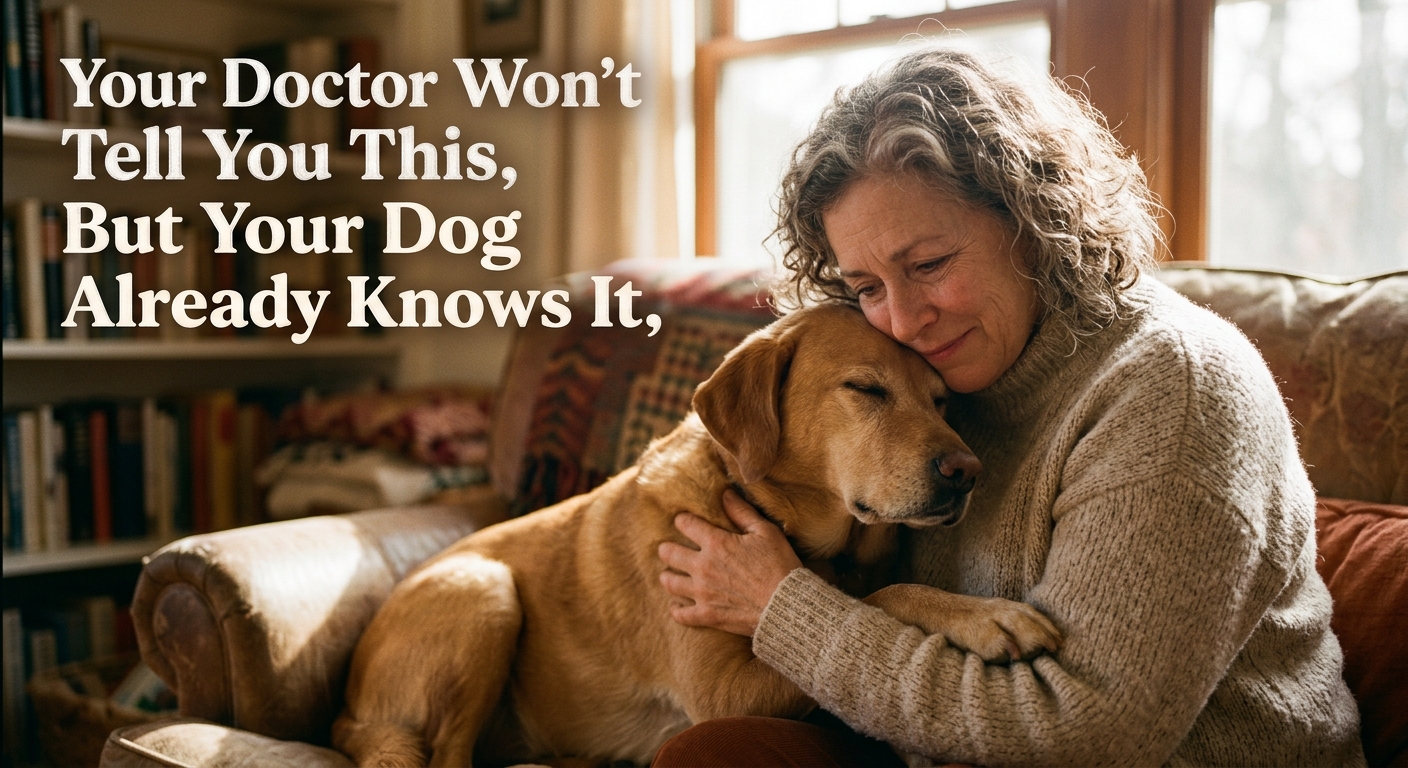
There is a moment most dog owners know well. You have just walked through the door after a brutal day. Your shoulders are tight, your jaw is clenched, your mind is still spinning through the meeting that went sideways and the inbox that never empties. And then a warm, wiggly creature rushes toward you with the kind of unfiltered joy that no human being on earth can convincingly fake.
Within minutes, something shifts. Your breathing slows. Your hands relax. The noise in your head gets quieter. You probably chalked it up to distraction or routine. But what if something measurably biological was happening in your body at that exact moment? What if your dog was, quite literally, healing you?
As it turns out, the science agrees with what dog lovers have always suspected. Petting a dog does not just feel good. It triggers a cascade of neurological and physiological changes that directly lower your blood pressure, reduce stress hormones, and rewire your brain’s threat response system. Let’s break down exactly how it works.
What Happens in Your Body the Moment You Touch a Dog
Within seconds of making physical contact with a dog, your body begins releasing a cocktail of feel-good neurochemicals. Researchers have identified three key players in this process:
- Oxytocin: Often called the “bonding hormone,” oxytocin floods your system during positive physical contact. It is the same hormone released during hugs, breastfeeding, and moments of deep human connection. Studies show that simply gazing into a dog’s eyes raises oxytocin levels in both the human and the dog.
- Serotonin: This neurotransmitter regulates mood, sleep, and appetite. Interacting with dogs has been shown to spike serotonin levels, which is one reason spending time with animals is now being incorporated into clinical mental health treatment.
- Dopamine: The brain’s reward chemical. When you pet a dog, your dopamine system activates in much the same way it does during pleasurable activities like eating your favorite meal or listening to music you love.
At the same time, your body suppresses the hormones that cause harm. Cortisol, the primary stress hormone responsible for raising your blood pressure and keeping you in a state of fight-or-flight, drops significantly during and after interaction with a dog. This hormonal see-saw, more good stuff up, more harmful stuff down, is the biological engine behind that feeling of calm.
The Blood Pressure Connection: What the Research Actually Shows
This is not feel-good speculation. The cardiovascular benefits of dog ownership and dog interaction have been rigorously studied for decades.
A landmark study published in the journal Hypertension found that stockbrokers with high-stress jobs and hypertension who adopted dogs showed significantly lower spikes in blood pressure during stressful tasks compared to those without pets. The researchers were so surprised by the results that they repeated the study. The findings held.
A 2019 review published in the Mayo Clinic Proceedings analyzed decades of cardiovascular research and concluded that dog ownership was associated with a 24 percent reduction in the risk of dying from any cause and a 31 percent reduction in the risk of cardiovascular death. These are not small numbers. These are numbers that would make a pharmaceutical company very excited.
Dr. Alan Beck, director of the Center for the Human-Animal Bond at Purdue University, has spent a career studying these interactions. His early research in the 1980s was among the first to document measurable drops in blood pressure, heart rate, and muscle tension during human-animal interaction. “The effect is almost immediate,” he noted in one study summary. “And it does not require the animal to do anything special. Presence and contact are enough.”
You Don’t Even Have to Own a Dog
Here is one of the most interesting findings in this entire body of research: you do not need a personal relationship with the dog to experience the physiological benefits.
Studies conducted with therapy dogs in hospital settings, university campuses, and nursing homes consistently show that interacting with an unfamiliar dog produces the same measurable changes in cortisol and blood pressure as interacting with a beloved family pet. College students petting therapy dogs before exams showed lower anxiety scores and reduced heart rates. Hospital patients who received therapy dog visits reported less pain and showed lower stress markers in their bloodwork.
This tells us something profound about the human nervous system. We are wired, at some deep biological level, to find comfort and safety in the presence of dogs. Some researchers believe this goes back tens of thousands of years to our co-evolutionary history with canines, a relationship so ancient that our bodies may have developed physiological responses to dogs the same way they developed responses to the people we love.
The Vagus Nerve: Your Body’s Hidden Highway to Calm
To understand why petting a dog works so well, it helps to understand one of the most underappreciated structures in the human body: the vagus nerve.
The vagus nerve is the longest cranial nerve in the body, running from your brainstem down through your heart, lungs, and digestive system. It is the primary pathway of the parasympathetic nervous system, which is sometimes called the “rest and digest” system, the biological opposite of fight-or-flight.
When you are stressed, your sympathetic nervous system is running the show. Your heart rate goes up. Your blood vessels constrict. Your blood pressure rises. Your digestion slows. You are in survival mode.
When you pet a dog, slow and gentle physical contact activates the vagus nerve, which sends signals to your heart to slow down, your blood vessels to dilate, and your body to stand down from high alert. This is measurable using heart rate variability (HRV) monitors, and the results are consistent. Dog-petting produces the kind of calm that breathing exercises, meditation, and certain medications are specifically designed to create.
7 Documented Benefits Beyond Blood Pressure
Once researchers started looking at the cardiovascular effects of human-dog interaction, they kept finding benefits in unexpected places. Here is what the science has uncovered:
- Reduced anxiety before medical procedures: Patients who spent time with therapy dogs before surgeries and procedures reported significantly lower pre-procedure anxiety than those who did not.
- Faster recovery after heart attacks: A University of Minnesota study found that heart attack survivors who owned dogs had significantly better one-year survival rates than those who did not.
- Lower cholesterol and triglyceride levels: Long-term dog owners have been found to have more favorable cholesterol profiles than non-owners, even after controlling for diet and exercise.
- Reduced loneliness in older adults: In elderly populations, pet ownership was found to buffer against the health effects of social isolation, which itself is a major cardiovascular risk factor.
- Improved mood in people with depression: Interaction with dogs has been shown to produce antidepressant-like effects in clinical settings, with some studies showing results comparable to short-term medication.
- Better pain management: Chronic pain patients who interacted with therapy dogs regularly reported needing less pain medication and scored lower on pain scales during flare-ups.
- Healthier stress responses in children: Children who grow up with dogs show more regulated cortisol responses to stress compared to those raised without pets, suggesting long-term neurological benefits that start early.
What This Means for the Way We Think About Health
Western medicine has historically treated health as a mechanical problem. Something breaks, we fix it. Blood pressure is too high, here is a pill. But the research on human-animal bonding points toward a more expansive understanding of what keeps us well.
Relationships matter. Touch matters. Feeling safe matters. And for millions of people, a dog provides all three in a form that requires no prescription, no co-pay, and no waiting room.
This does not mean dogs replace medicine. It means they complement it in ways we are only beginning to fully appreciate. Many hospitals, cancer centers, rehabilitation facilities, and mental health clinics have already incorporated animal-assisted therapy into formal treatment protocols because the evidence base is now strong enough to take seriously.
The next time someone tells you that you are “too attached” to your dog, you can tell them you are simply optimizing your cardiovascular health. And the next time your dog looks up at you with those soft, patient eyes while you scratch behind their ears, know that something real is happening. Something measurable. Something that hundreds of researchers have spent careers trying to fully understand.
Your dog figured it out a long time ago.