🎧 Listen to this story
Narrated by Kore · 6,877 characters
Most shelters have a clock. A time when the doors close, the beds fill, and anyone who arrives late is turned back into the dark. Harbor House has a different kind of clock: a battered porch light that burns from dusk until dawn, and a front door that has not been locked at night in nineteen years.
This is the story of how that unlocked door gave a man named Daniel Reyes his life back. It is told the way it was told to me, in pieces, over several evenings, with the staff and with Daniel himself.
The Man Who Walked Past Seven Shelters
Daniel served twelve years in the Army, two deployments, and came home to a world that seemed to have moved on without leaving him a seat. By his own account, the unraveling was slow. First the sleep went. Then the job, then the marriage, then the apartment. By the winter he turned fifty-one, he had been sleeping in a rented storage unit, a bus shelter, and, on the worst nights, the back seat of a car that no longer ran.
He had tried shelters before. Seven of them, he says, though he stopped counting. The problem was never the beds. The problem was the rules, and one rule in particular: be inside by a certain hour, or do not come in at all.
“My nights don’t follow a schedule,” Daniel told me. “I’d wake up at two in the morning with my heart going and I had to walk. If I walked out, I was locked out. So I stopped going in. It was easier to stay outside than to fail at inside.”
The Night He Found the Light
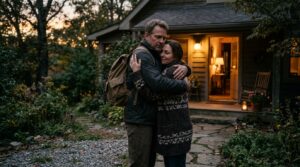
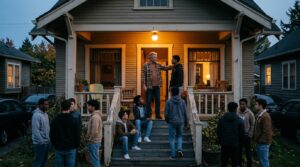
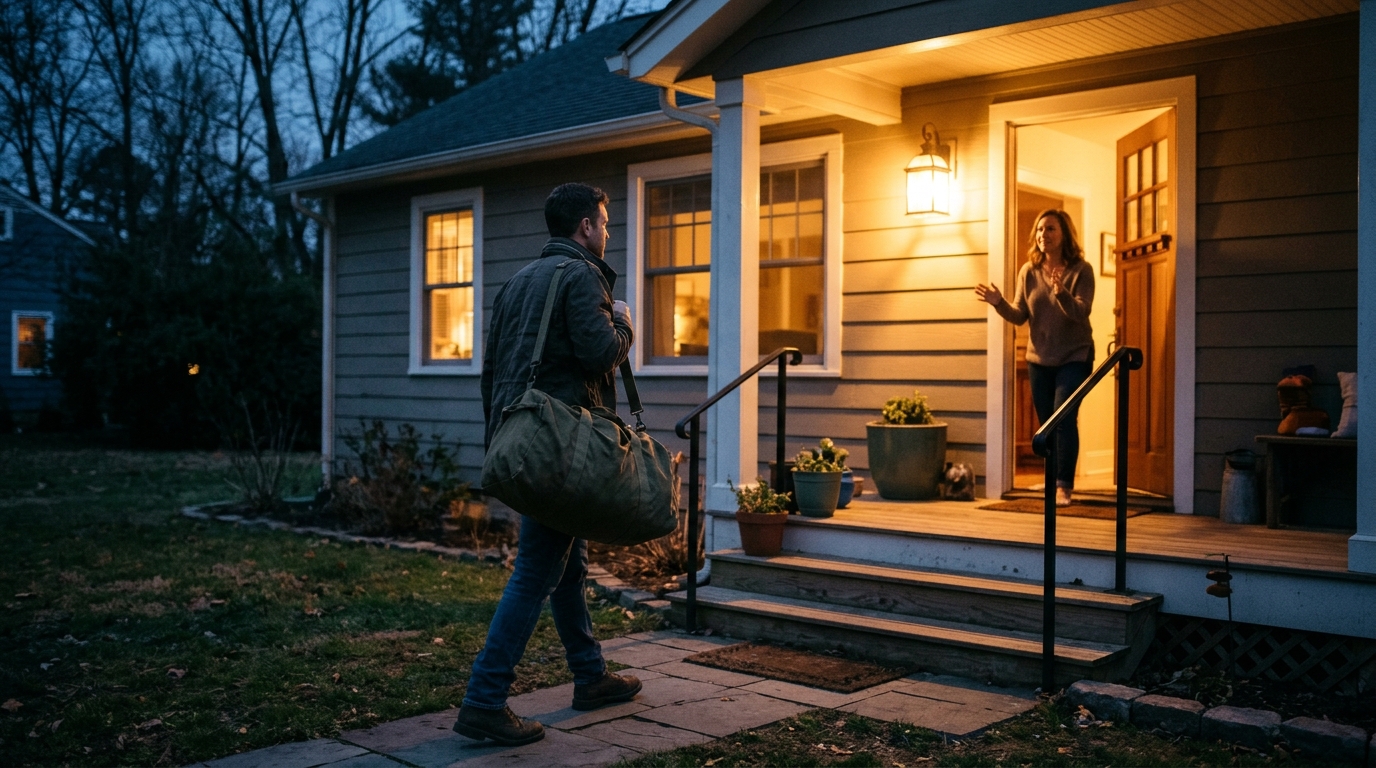
It was close to midnight on a freezing February evening when Daniel saw the porch light. He had been walking for hours, and he had almost no intention of stopping anywhere. But the light was warm and yellow, and the door under it was slightly open, and for reasons he still cannot fully explain, he climbed the steps.
Inside, a night volunteer named Marguerite was folding blankets at a long wooden table. She did not ask for ID. She did not hand him a clipboard. She looked up, said, “You look cold. There’s soup on the stove,” and went back to her folding.
“That was it,” Daniel said. “No speech. No questions. Just soup.”
What the Unlocked Door Actually Means
The policy sounds simple, but it is built on a hard-won philosophy. The founders of Harbor House noticed that the people most in need of shelter were often the ones least able to follow its rules. Trauma does not keep office hours. Neither does grief, nor insomnia, nor the kind of fear that sends a person out walking at 3 a.m.
So they made a promise: the door stays unlocked, and a person can come and go as they need. Here is what that looks like in practice:
- No curfew. Residents can leave to walk, breathe, or sit on the steps and return at any hour.
- No interrogation at the door. Names and paperwork come later, once a person has eaten and slept.
- A volunteer awake every night. Someone is always there, always unhurried, always willing to sit in silence.
- A quiet room for restless hours. A dim, warm space with chairs and tea for those who cannot sleep.
The Evening Hours That Healed Him
Daniel stayed that first night, and the next, and the one after. What changed him was not any program, though there were plenty of those. It was the evenings.
At Harbor House, the hours after dinner are deliberately slow. The television is off. Someone usually plays soft music in the common room. Residents drift into the kitchen to wash cups, or sit near the window as the sky goes from orange to violet. For a man whose evenings had always been the most frightening part of the day, this was a kind of retraining.
“Night used to be the enemy,” Daniel said. “The dark was where everything came back. But here, the dark had a person in it. Marguerite, or Tom, or whoever had the shift. There was always somebody sitting in the kitchen with a lamp on. You’d come down at two in the morning and they’d just nod, like you were expected.”
He began to sleep, first for two hours, then four. He began to eat at the long table with the others. And slowly, almost without noticing, he began to talk.
The Conversation on the Back Steps
Daniel remembers one evening in particular, about three weeks in. He was sitting on the back steps watching the last light drain out of the sky when a volunteer named Tom sat down beside him. Tom was a retired mechanic and a veteran himself. He did not say anything for a long while.
“Finally he said, ‘It gets quieter. Not gone, but quieter.’ That’s all. I’d been waiting years for somebody to say that and mean it.”
That conversation led to another, and then to a referral for veterans’ counseling, which Daniel had refused for a decade and now agreed to attend. The unlocked door had done something no lecture could: it had proven that he could leave and still be welcome back.
The Long Road Up
Recovery was not a straight line. There were nights Daniel walked out and did not return until morning. There was a week in April when he vanished entirely. The staff did not mark him as a failure. When he came back, thin and ashamed, the porch light was on, and Marguerite was at the table with a bowl of soup.
“She didn’t say a word about the week I was gone,” he said. “She just asked if I wanted bread with it.”
Over the following months, the pieces came together:
- He completed a veterans’ counseling program and began sleeping through most nights.
- He reconnected with a brother he had not spoken to in six years.
- He enrolled in a job training course through a veterans’ employment office.
- He accepted a part-time position at a hardware store, thanks in part to Tom’s reference.
- Eleven months after he first climbed the steps, he signed a lease on a one-bedroom apartment.
What Daniel Does at Night Now
These days, Daniel lives about a mile from Harbor House. On Thursday evenings, he volunteers the late shift. He arrives around dusk, hangs up his coat, and fills the kettle. When the doors stay unlocked and the night deepens, he sits in the kitchen with a lamp on, waiting for whoever might climb the steps.
“I know what it is to walk past seven doors,” he told me. “If somebody comes in at midnight, I want them to find the light on and a person who isn’t surprised to see them.”
A Quiet Thought Before Sleep
There is something worth carrying with us from this story into the end of our own day. We tend to believe that help must be structured, scheduled, and earned. But sometimes the most powerful gift is simply availability: a door that does not close, a lamp that stays lit, a person who does not ask you to explain yourself before they offer you soup.
As you wind down tonight, you might ask yourself a gentle question. Who in your life is walking in the dark right now? And what is one small light you could leave on for them?
The porch light at Harbor House has burned every night for nineteen years. Somewhere out there, a tired person is walking toward it. And because someone kept it lit, they will not have to knock.